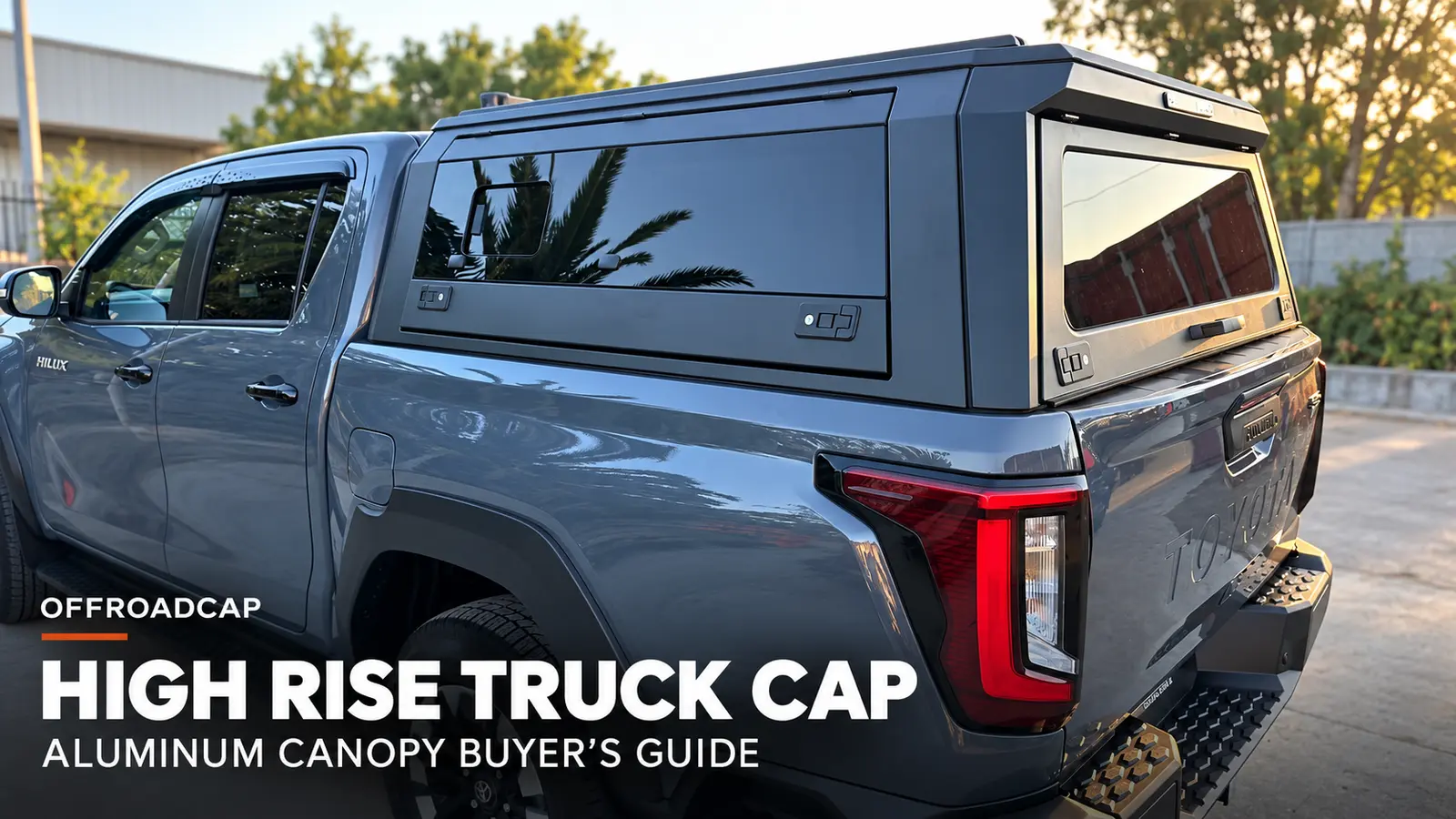
A high rise truck cap adds covered cargo space above the height of a pickup’s cab. That extra clearance can help when carrying tall equipment, stacked storage boxes or bulky camping gear. But a taller roof is useful only when the canopy also fits the truck, gives practical access to the load bay and supports the way the vehicle is used.
This guide explains the features to compare in a high-roof aluminum canopy, from CAD-designed construction and full-width doors to mounting rails and installation. Start with the OFFROADCAP pickup canopy range to identify vehicle applications, then confirm the roof profile and dimensions of the configuration you need.
What Is a High Rise Truck Cap?
A high rise truck cap has a roof that extends above the pickup cab. A cab-high cap stays approximately level with the cab roof. Both enclose the truck bed, but their usable internal height and overall vehicle clearance differ.
The terms truck canopy, truck cap and truck topper can describe the same general product category. They do not, by themselves, confirm a high-rise design. Ask for a side-elevation drawing showing the canopy roof relative to the cab, along with the internal height and rear-door opening dimensions.
For tall cargo, measure the complete loading route. A box might fit beneath the roof but still be too large to pass through the rear opening. Interior shelves, seals and frames can also reduce the usable space.
Match Roof Height to the Job
For commercial work, extra headroom can accommodate taller tool cases or equipment. Side access may be equally important when users need to retrieve small tools throughout the day. For camping, consider the height of packed gear and how it will be arranged inside the bed.
Measure the vehicle’s expected overall height with any rack or accessories installed. Compare that figure with garages, covered parking and other restricted spaces on the route. A high-rise design should solve a real clearance problem inside the canopy without creating an unexpected one outside it.
Before choosing a roof profile, decide which cargo must travel upright, what can be laid flat and how often the truck enters height-restricted areas.
Not sure which roof height suits your truck? Read our
high-rise vs. cab-high truck cap comparison
to compare cargo clearance, camping headroom and garage access
before choosing your canopy.
Aluminum Construction: Look Beyond the Exterior
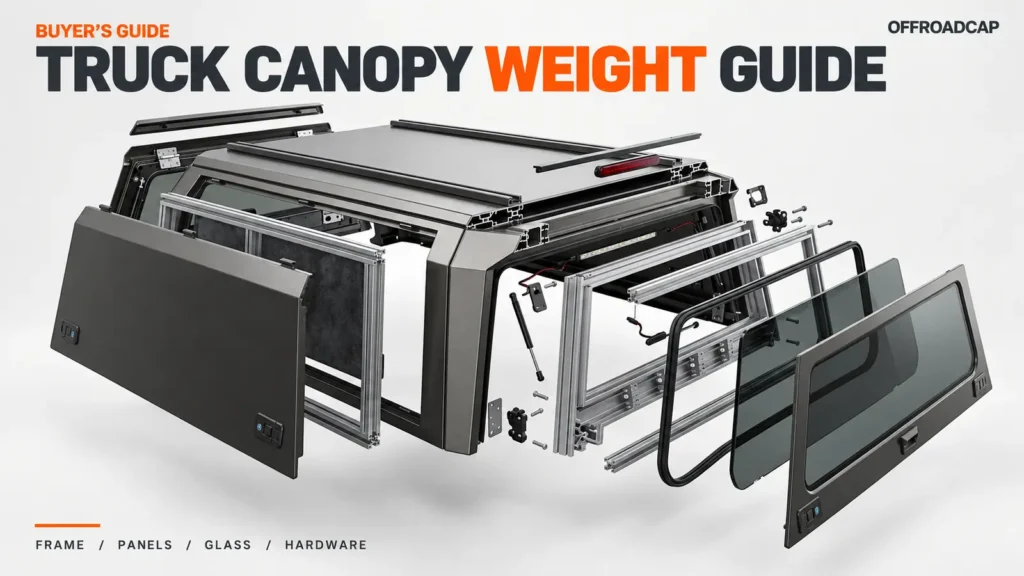
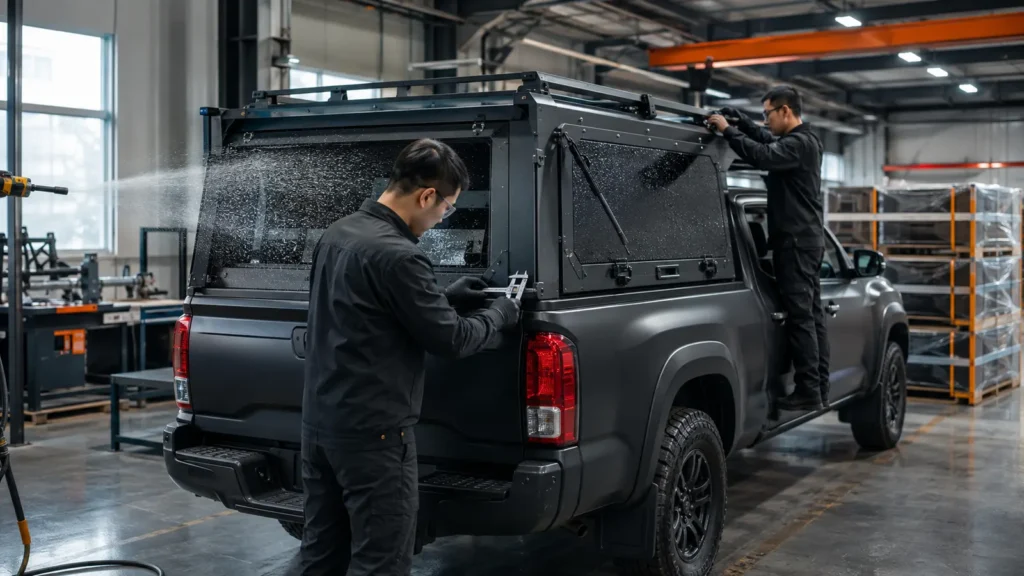
The aluminum canopy configuration discussed here uses a CAD-designed structure, TIG-welded aluminum extrusions and sheet panels that are CNC laser-cut and bent. These details connect the finished appearance to the frame, panel geometry and assembly process.
When comparing aluminum truck caps, ask how the manufacturer controls door alignment, panel dimensions and mounting positions. Review the joints and reinforcement around access openings. Material selection matters, but the way the frame and panels are assembled also affects the finished product.
See the OFFROADCAP truck canopy production process for a closer look at engineering, fabrication, finishing and assembly. Confirm which construction details apply to the particular model in your quotation.
Full-Width Rear Doors and Full-Length Side Access
A full-width rear door makes the back of the load bay easier to use. The supplied double-cab canopy configuration also includes full-length side doors, giving access to equipment near the front of the bed.
Compare clear opening dimensions with your actual cargo. Check where the open door sits, whether a nearby wall limits movement and whether the opening aligns with the planned storage layout. A large door is most useful when the equipment behind it remains within reach.
Plan storage at the same time as access. Browse pickup storage boxes when discussing an interior arrangement, and confirm the box dimensions and mounting compatibility before ordering.
Weather Sealing and Rainwater Control
The featured door specification describes centre-flex waterproof hinges designed to reduce rainwater dripping into the load bay when the doors are open. This is a useful detail for users who regularly access equipment in wet weather.
Closed-door protection depends on the complete installation: seals, panel joints, glass interfaces and the connection to the truck bed. Ask how the model is tested and check the areas around the rear door and tailgate after fitting. A waterproof product description should be understood alongside the manufacturer’s stated test and use conditions.
OFFROADCAP’s craftsmanship and quality checks provide context for sealing and hardware inspection. Request evidence for the selected configuration rather than assuming every option has identical performance.
Locks, Glass and Gas Struts
The supplied configuration lists keyed-alike locks, E-marked automotive safety glass and German-made gas struts. Keyed-alike locks simplify access by allowing the canopy doors to use the same key. Gas struts support door opening, while hinges and latches determine how smoothly the doors operate.
Confirm the exact hardware and glass included in the order. Check availability of replacement keys, locks, seals and gas struts. For distributors, a clear parts list makes it easier to support the product after delivery.
Central locking is a separate configuration question. It should not be assumed from the presence of keyed-alike mechanical locks.
Canopy Weight: Confirm the Complete Configuration
The double-cab aluminum canopy in the supplied specification has an approximate weight of 57 kg. That is a configuration-specific figure, not a standard weight for every truck canopy or high-rise model.
Compare weights for the same vehicle, bed size and equipment level. Include glass, mounting hardware, roof accessories and internal storage when planning the finished setup. Freight gross weight includes packaging and should be kept separate from the weight fitted to the truck.
For model-specific examples and a clearer comparison of net, shipping and installed weight, read our truck canopy weight guide before planning accessories and payload.
Vehicle-Specific Fitment Comes Before Installation
Roof height does not determine vehicle compatibility. The canopy must also match the truck’s model year, cab configuration, bed dimensions, rail shape and tailgate clearance. Bed liners and other accessories should be included in the fitment discussion.
The Ford F150 5.5FT canopy and Toyota Tacoma 2016–2023 5FT canopy illustrate vehicle-specific product listings. They are fitment examples; their listings alone do not establish that a high-rise roof is available for those applications.
For a taller-roof request, confirm the roof drawing and fitting kit with the supplier before committing to the order.
No-Drill Mounting and Ready-to-Fit Delivery
The supplied canopy specification describes an assembled, ready-to-fit product. On compatible vehicles, mounting brackets fasten to the manufacturer’s load points in the bed, avoiding drilling.
Its stated fitting time is approximately 20–30 minutes for one person. Treat that as an estimate for the fitting work, with assistance for lifting and positioning the canopy. It should not be applied to every model or interpreted as a complete solo-handling instruction.
Also confirm the delivery format. A modular canopy can require assembly before vehicle installation, whereas a preassembled unit arrives as an enclosure ready for positioning.
Reinforced Roof and Standard Mounting Rails
The supplied design lists a reinforced roof with a 150 kg load capacity and standard mounting rails that accept compatible M8 cup-square bolts and accessories such as tie-down rings.
The meaning of the load figure must be clarified before equipment is fitted. Confirm whether it applies while parked or driving, whether off-road use changes the limit, and which rail or rack arrangement was used. Include the rack itself in the load calculation.
A 150 kg figure without its conditions does not confirm rooftop-tent suitability. Obtain written approval for the complete proposed canopy, rack and tent arrangement.
Export Packaging and Supplier Support
The supplied specification describes reinforced-box packaging for international delivery. Buyers should confirm protection for the glass, corners, coated surfaces and mounting kit, together with packed dimensions and gross weight.
For repeat orders, agree on model identification, hardware lists and replacement-parts support. Read the OEM truck cap supply guide for the broader procurement process, and use the canopy manufacturer evaluation checklist when reviewing samples and production evidence.
Frequently Asked Questions
Does every truck canopy count as a high rise truck cap?
No. A high-rise roof extends above the pickup cab. Confirm the actual profile and dimensions instead of relying on the general product name.
Is 57 kg the weight of every aluminum canopy?
No. The approximate 57 kg figure belongs to the supplied double-cab specification. Other sizes and equipment combinations differ.
Does no-drill fitting apply to every truck?
No. The supplied specification says it applies to compatible vehicles. The exact truck and fitting kit must be checked before ordering.
Can the 150 kg roof carry a rooftop tent?
The figure alone does not answer that question. The applicable load conditions, rack arrangement and intended tent setup need confirmation.
Choose the Configuration Around Your Cargo
A practical high rise truck cap combines useful headroom with accessible doors, dependable hardware and the correct mounting system. Start with the cargo and vehicle details, then compare the roof profile and equipment package.
For wider selection advice, explore the truck cap buying guide or our off-road canopy selection guide.
Send OFFROADCAP your canopy requirements, including vehicle make, model, year, bed dimensions, required internal height, intended use and order quantity. Our team can discuss fitment, roof options and a suitable quotation.