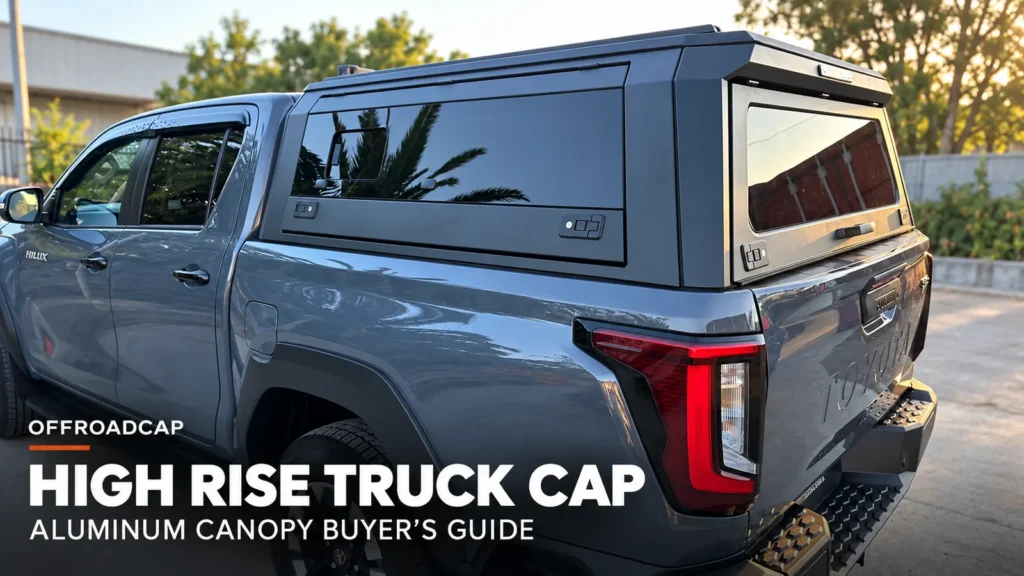
Truck canopy weight depends on the vehicle application, enclosure size, construction and equipment supplied. In OFFROADCAP’s current product listings, the Ford Ranger 2023+ OC10115 canopy has a net weight of 42 kg, while the Ford F150 5.5FT OC20109 canopy is listed at 56.34 kg. These are examples for specific models, rather than a standard weight for every canopy.
For a useful comparison, separate the canopy’s net weight from its shipping weight and the weight of the complete installed setup. Roof racks, storage systems and other equipment can change the figure that matters on your truck.
This guide explains how to compare specifications and build a practical weight budget. For the wider checklist covering roof height, construction, access and fitment, read our high rise truck cap buyer’s guide.
How Much Does a Truck Canopy Weigh? Real Examples
The following figures compare two aluminum truck canopy models using their linked OFFROADCAP specifications. Each row describes a different vehicle application, so confirm the roof profile, doors, glazing and equipment included in your own quotation.
| Canopy application | Listed net weight | Listed gross weight |
|---|---|---|
| Ford Ranger 2023+ — OC10115 | 42 kg (approximately 92.6 lb) | 51 kg (approximately 112.4 lb) |
| Ford F150 5.5FT 2015+ — OC20109 | 56.34 kg (approximately 124.2 lb) | 62.64 kg (approximately 138.1 lb) |
The kilogram values are the published specifications; the pound values are rounded conversions. Ask which mounting parts and accessories the net figure includes, and request the final packed gross weight for the shipping format you select.
Net Weight, Shipping Weight and Installed Weight
These three figures answer different questions:
- Net weight: the product weight identified by the supplier. Confirm whether this covers the complete enclosure, standard hardware, mounting kit and any separately packed roof components.
- Shipping gross weight: the packed weight used for the shipment. Cartons, protective materials and wooden packing can affect it. For a multi-carton order, request the total for all packages.
- Installed weight: everything added to the truck for the finished canopy setup, including any mounting parts and accessories not already included in the product figure.
A freight gross-weight figure should not be entered directly into a vehicle weight budget when its packaging will be removed. Equally, a bare canopy figure may leave out equipment that remains on the vehicle.
For repeat purchases, keep a written list of included components. It prevents a quotation for an empty enclosure from being compared with one that already includes a rack or internal storage.
What Changes Truck Cap Weight?
The material name is one factor in the finished weight. The following details also need to match when comparing products:
- Vehicle and bed dimensions: enclosure length, width and shape determine how much structure and panel material the design needs.
- Roof profile: a taller roof changes the enclosure geometry. Obtain the weight of the actual roof option instead of estimating from its appearance.
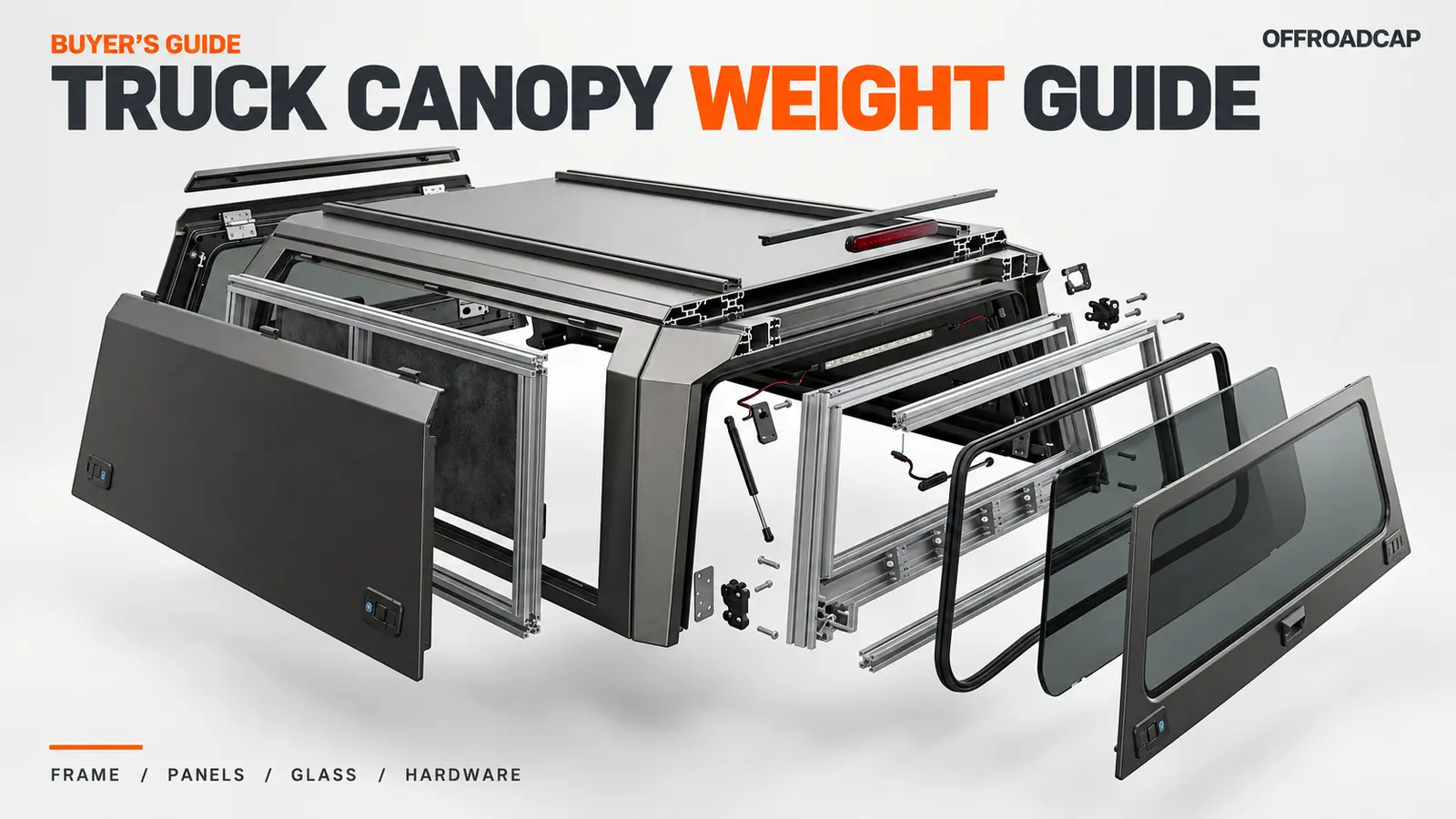
- Frame and reinforcement: extrusions, joints and reinforcement around doors and roof mounting points form part of the product.
- Doors, glass and hardware: compare the specified glazing, access panels, hinges, locks and gas struts.
- Fitted equipment: roof racks, lighting, shelving and storage systems add to the complete setup when they are not included in the base specification.
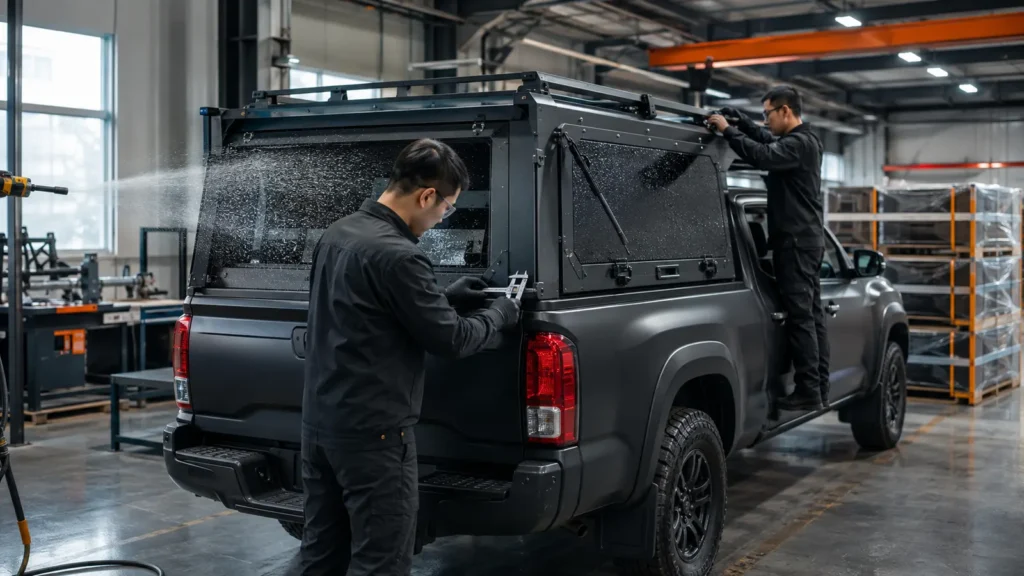
Review the OFFROADCAP truck canopy production process when discussing fabrication and assembly. Then connect the construction details to a weight specification for the exact configuration being quoted.
Choosing a Lightweight Truck Cap
A lightweight truck cap can leave more of the truck’s existing payload allowance available for people and cargo. The useful comparison is between complete products that fit the same vehicle and meet the same requirements.
When comparing an aluminum truck cap with a fiberglass enclosure, request the configured weight of each candidate. Material labels alone cannot establish which finished product is lighter. Differences in size, windows, door layout, reinforcement and fitted equipment can affect the comparison.
A lightweight truck canopy also needs the access and layout your work requires. A lower base weight offers limited practical benefit if the chosen enclosure cannot accommodate your equipment or the storage arrangement you plan to use.
Start with the OFFROADCAP pickup canopy range to identify vehicle applications, then compare the requested equipment packages.
Build a Weight List for the Complete Setup
Before calculating remaining payload, list everything that will be added to the vehicle. Begin with the canopy and confirm which parts are already included in its supplied weight.
Add roof racks, roof-mounted equipment, internal shelving, drawers, electrical equipment and any additional bed accessories. Record water and other carried supplies as cargo. Count every item once, keeping included hardware separate from optional additions.
If you intend to fit pickup storage boxes, include both the empty boxes and the equipment carried inside them. Storage makes cargo easier to organize, but its own weight remains part of the setup.
Use the same unit throughout the calculation. One kilogram is approximately 2.205 pounds; convert the figures before adding specifications supplied in different units.
How Truck Canopy Weight Affects Payload
Use the payload information and loading instructions for your exact vehicle. A maximum figure advertised for a model range may describe a different engine, cab, bed or equipment specification.
The canopy, additional accessories, occupants and carried cargo all use part of the available allowance. If towing, include the load transferred to the truck through the hitch in accordance with the vehicle manufacturer’s instructions.
Remaining payload estimate = vehicle-specific payload allowance − added canopy and accessories − occupants − cargo − applicable hitch load.
For example, assume a truck has a confirmed 800 kg payload allowance before the following additions. The weights below are illustrative and do not describe an OFFROADCAP model. The 60 kg canopy figure in this example includes its mounting hardware.
| Added item or load | Example weight |
|---|---|
| Canopy with mounting hardware | 60 kg |
| Roof rack | 20 kg |
| Empty storage system | 35 kg |
| Occupants | 160 kg |
| Tools, supplies and other cargo | 110 kg |
| Total counted weight | 385 kg |
| Remaining allowance in this example | 415 kg |
For your own setup, include existing additions that are not already accounted for in the vehicle’s stated allowance. Check the applicable gross vehicle and axle limits, and verify the completed loaded vehicle on a suitable scale when confirming the final configuration.
Keep Roof Height and Roof Load Ratings Separate
Truck canopy weight describes the enclosure and its equipment. A roof-load rating describes the permitted load under specified conditions. Neither figure can be calculated from the other.
For a proposed roof rack or rooftop tent, request the canopy and rack mounting specifications, the applicable driving and parked ratings, and any off-road restrictions. Include the roof equipment in the vehicle weight budget as well.
Roof height is another separate choice. Our high-rise vs. cab-high truck cap comparison explains how cargo clearance, sleeping-platform headroom and garage access affect that decision. Obtain a configured weight for each roof option you are considering.
Plan Handling Around the Complete Canopy
If you expect to remove the canopy regularly, discuss handling before ordering. Weight, overall dimensions, approved lifting points and available workspace all affect the procedure.
Ask for the fitting and lifting instructions for the selected model, including the assistance or equipment required. Also confirm whether the delivery is preassembled or requires assembly before installation. A published net-weight figure alone does not establish a suitable lifting method.
What Fleet and Distributor Buyers Should Request
For fleet, wholesale or distributor enquiries, use one specification format across every candidate. Request:
- Vehicle make, model year, cab configuration and bed application.
- Net weight with a clear list of included components.
- Additional weights for the selected rack, storage and other options.
- Roof profile, door layout and the relevant load ratings.
- Total packed gross weight, package count and packed dimensions.
- An approved configuration drawing or component list for repeat orders.
Separate vehicle planning from freight planning. Net and installed weights support the equipment discussion, while packed weight and dimensions support logistics. A change in glazing, roof equipment or packing should be reflected in the updated quotation.
Frequently Asked Questions
How much does a camper shell weigh?
For an enclosure covering the pickup bed, compare the weight of the exact model, material, doors and equipment. A lightweight camper shell with a basic enclosure and one fitted with storage or roof accessories can have different complete weights. A bed cap should also be distinguished from a full slide-in camper.
How much does a truck topper weigh?
A truck topper is another common name for a bed enclosure. The two OFFROADCAP examples above list net weights of 42 kg and 56.34 kg for different vehicle applications. Confirm the components included before using either figure in an installed weight calculation.
Does a high-rise truck cap always weigh more than a cab-high cap?
Roof height alone does not provide a reliable weight comparison. Request the complete weights for the same truck application and equipment package, with the roof option identified in each specification.
Should I use net weight or gross weight when planning payload?
Use the weight of what remains installed or carried on the truck. Start with the verified product net weight and add any excluded mounting parts and accessories. Shipping packaging that is removed does not form part of that installed setup.
Request a Weight Specification for Your Truck
A useful truck canopy weight comparison starts with a matching vehicle application and a clearly defined equipment package. Confirm the supplied net weight, list additional items and check how the completed setup fits your vehicle’s loading limits.
Send OFFROADCAP your canopy requirements, including the truck model, year, bed dimensions, preferred roof profile, planned accessories and order quantity. Our team can discuss the applicable configuration and weight information for your project.