
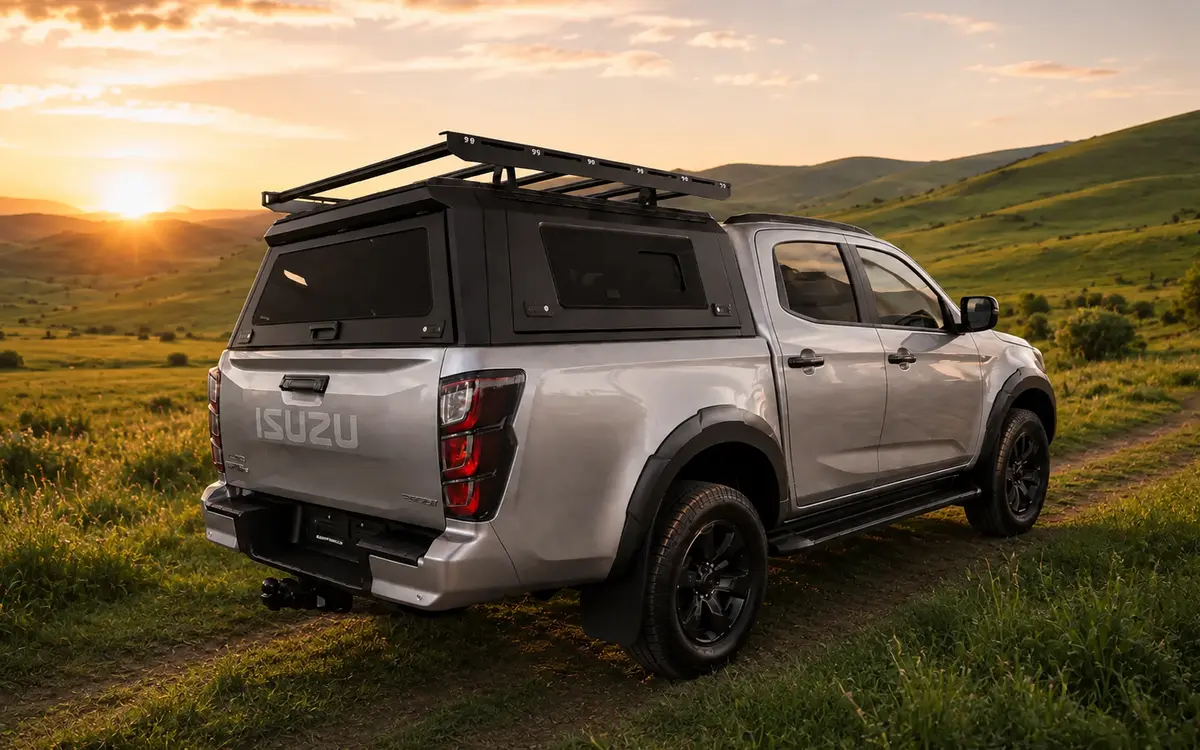
Choosing a truck cap is not simply a matter of selecting the best-looking model. The right cap should match the pickup, protect the cargo, support the intended application and remain practical over years of use.
For distributors, fleet buyers and vehicle accessory brands, the decision also involves product consistency, installation efficiency, customization options and supplier support. This truck cap buying guide explains the main factors to evaluate before purchasing an aluminum truck cap or pickup canopy.
1. Start With the Intended Use
Before comparing materials or features, decide how the truck cap will be used. Different applications require different configurations.
Common applications include:
- Daily cargo protection
- Commercial and trade work
- Fleet and utility vehicles
- Camping and overlanding
- Equipment transportation
- Mobile service vehicles
- Outdoor and off-road travel
A work vehicle may require secure side access, internal lighting and organized tool storage. An overlanding setup may place greater importance on roof load capacity, ventilation, weather sealing and accessory compatibility.
Defining the application first makes it easier to avoid unnecessary features while ensuring that essential functions are included.
2. Compare the Construction Material
Material affects weight, durability, corrosion resistance, appearance and long-term maintenance.
Aluminum Truck Caps
Aluminum is widely used for modern pickup canopies because it offers a strong balance between structural strength and manageable weight. A properly manufactured aluminum truck cap can provide:
- Good corrosion resistance
- Lower weight than many heavy steel structures
- Strong structural performance
- Compatibility with modular accessories
- Suitability for commercial and off-road applications
- Flexible OEM and ODM customization
Buyers should ask about the aluminum grade, panel thickness, frame construction, welding quality and surface treatment.
Fiberglass Truck Caps
Fiberglass caps can provide a smooth appearance and may be color-matched to the vehicle. However, they can be heavier and may require more care when exposed to impacts or demanding commercial use.
The best material depends on the application, but aluminum is often preferred for buyers who need durability, modularity and reliable batch production.
3. Confirm Vehicle Fitment
Correct fitment is one of the most important parts of choosing a truck cap. Pickup beds vary by vehicle brand, model, year and bed length.
Before ordering, confirm:
- Vehicle manufacturer
- Vehicle model
- Production year
- Bed length
- Cab configuration
- Tailgate dimensions
- Existing bed accessories
- Roof or bed-mounted equipment
A cap designed for one generation of a pickup may not fit another generation correctly, even when the model name is the same.
Professional manufacturers may use vehicle measurements, digital scanning, engineering drawings or physical fitment testing to confirm compatibility. For bulk orders, request fitment documentation or a sample installation before approving large-scale production.
4. Check Structural and Roof Load Requirements
Many buyers use the top of a truck cap for roof racks, recovery equipment, luggage boxes, work tools or camping equipment.
Ask the supplier to clearly distinguish between:
- Static roof load
- Dynamic roof load
Static load refers to the weight supported while the vehicle is parked. Dynamic load refers to the weight supported while the vehicle is moving.
Do not assume these values are the same. Confirm the tested capacity of the complete structure, including the roof panel, frame, mounting points and rack system.
For demanding applications, buyers should also review how weight is transferred through the canopy structure and into the pickup bed.
5. Evaluate Access and Security
A truck cap should make cargo easier to access without reducing security.
Depending on the application, useful access options may include:
- Rear lift-up door
- Side gullwing doors
- Sliding side windows
- Fixed glass panels
- Solid aluminum side panels
- Central locking
- Heavy-duty mechanical locks
- Internal release mechanisms
Commercial users may prefer solid lockable side doors for tools and equipment. Camping users may prefer windows, ventilation and easier access from multiple sides.
Check the hinges, gas struts, locks, handles and door frames. These components are used frequently and have a major influence on long-term reliability.
6. Review Weather Sealing and Ventilation
A truck cap should help protect cargo from rain, dust and changing outdoor conditions. However, weather resistance depends on the complete sealing system rather than the outer material alone.
Review the following areas:
- Door seals
- Window seals
- Roof joints
- Corners and panel connections
- Mounting surfaces
- Rear door and tailgate interface
- Drainage design
For camping, pets or moisture-sensitive cargo, ventilation may also be important. Sliding windows, vents or other airflow solutions can help reduce heat and condensation.
Buyers should ask whether the product has undergone water, dust or road-condition testing.
7. Consider Accessory Compatibility
A modular truck cap can adapt to different markets and customer requirements.
Common accessories include:
- Roof racks
- Crossbars
- MOLLE panels
- Internal LED lighting
- Storage boxes
- Side windows
- Pop-up windows
- Ladder racks
- Tool mounting systems
- Camping and recovery equipment mounts
Before purchasing, confirm whether accessories use standardized mounting points or require drilling. A modular structure makes it easier for distributors to offer different configurations without stocking completely different canopy models.
8. Understand the Installation Method
Installation affects labor cost, delivery efficiency and customer satisfaction.
Ask the supplier:
- Whether drilling is required
- How the canopy is secured to the pickup bed
- Which tools are required
- How many installers are needed
- Whether seals and mounting hardware are included
- Whether installation instructions or videos are available
- Whether the cap can be removed without damaging the vehicle
For distributors and fleet buyers, a repeatable installation process is particularly important. Installation should be tested on the exact vehicle model before large quantities are ordered.
9. Assess Customization and Supplier Capability
For private-label brands, distributors and vehicle accessory companies, the supplier is as important as the product.
Important customization options may include:
- Product dimensions
- Door and window configurations
- Surface color and finish
- Logo and branding
- Packaging
- Locks and hardware
- Roof systems
- Internal storage layouts
- Lighting and electrical preparation
Buyers should also evaluate engineering support, quality-control procedures, production consistency, communication, spare-parts availability and after-sales service.
A low sample price does not always indicate a lower total cost. Poor fitment, inconsistent batches, damaged packaging or unavailable replacement parts can create much greater costs later.
Truck Cap Buying Checklist
Before placing an order, confirm the following:
- The exact pickup model, year and bed length
- The primary application
- Aluminum grade and construction
- Static and dynamic roof load
- Door and window configuration
- Locking and security requirements
- Weather sealing and ventilation
- Accessory compatibility
- Installation method
- Available customization
- Warranty and spare-parts support
- Packaging and delivery requirements
Choose a Truck Cap for the Complete Application
The best truck cap is not necessarily the model with the most features. It is the model that fits the vehicle correctly, supports the intended use and delivers reliable performance throughout its service life.
OFFROADCAP provides aluminum pickup canopy solutions for distributors, vehicle accessory brands, fleet buyers and aftermarket partners. Available options include different door configurations, window systems, roof accessories, storage solutions and OEM or ODM customization.
Contact the OFFROADCAP team to discuss vehicle fitment, product configuration, bulk purchasing or private-label requirements.