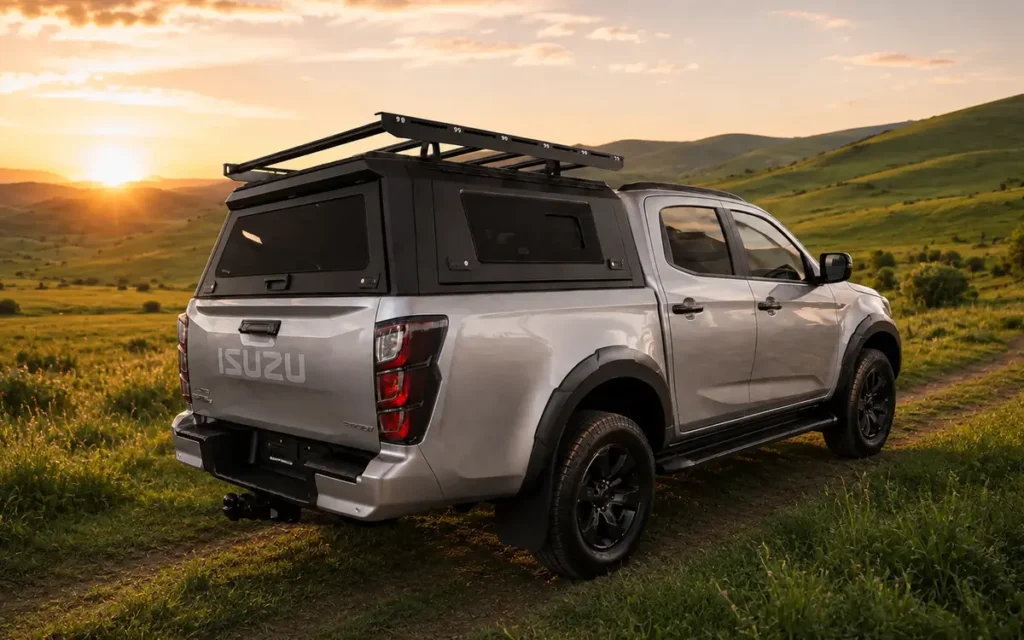

Start your truck cap camping setup by measuring the usable length with the tailgate closed, the height above the mattress and the opening you’ll use to get in and out. Take those measurements before you buy a cap or build a platform. A drawer that adds storage by day can leave very little space to sit up at night. A cooler that fits the bed can still block the rear exit.
Start with the people and gear you actually take. Use the mattress thickness, bedding, cooler and cases you plan to carry. A solo sleeper with a low pad can keep an aisle beside the bed. Two people may need the full width above the wheel wells. Each layout puts the windows, door openings and storage in different places relative to the sleepers.
Measure the Space for Truck Cap Camping
Measure at the height where your mattress will sit. If you’re comparing caps, ask for internal dimensions or a drawing for your exact truck, cap and door configuration. Nominal bed length helps identify the truck. Your finished sleeping space depends on the liner, the shape of the cap, the closed tailgate and anything installed inside.
| What to measure | Where to measure it | What it tells you |
|---|---|---|
| Usable length | At mattress height, with the tailgate and cap hatch closed | Whether the mattress and bedding fit front to rear |
| Usable width | At the narrowest point along the proposed bed, including wheel wells and hardware | Whether a floor-level pad or a raised platform makes sense |
| Clear height | From the finished mattress top to the lowest obstruction over the area where you sit or turn | How much room you have to change clothes or move toward the exit |
| Clear opening | At the narrowest usable part of the rear opening with the hatch and tailgate in their intended positions | Whether the mattress, platform sections and cases can pass through |
Check the height in several places. A latch or light above your shoulders can reduce the usable space even when the roof looks tall at the center. Measure the opening with any drawer handles or fridge slides fitted. If your mattress folds or rolls for loading, check its size both packed and fully laid out. Use a cardboard outline to check whether a rigid platform section can turn through the opening.
Choose a Platform Height for Your Camper Shell Camping Setup
A pad at bed-floor level leaves the most height above it. Wheel wells may limit mattress width. A raised platform can span the wheel wells and leave storage underneath. Each inch added to the platform or mattress takes an inch from the space above it, so choose the height with the tallest piece of gear you intend to store underneath in mind.
For example, suppose you measure 44 inches from the bed floor to the lowest obstruction in the sitting area. With a deck top 12 inches above the floor and a 4-inch mattress, you have 28 inches of clearance above the mattress. Lower the deck to 8 inches and the same mattress leaves 32 inches. These are example dimensions. Actual under-deck storage also depends on deck thickness, supports and the path a box takes to slide out.
Before cutting panels, mark the proposed mattress height and try the movements you’ll make at camp. Sit up, turn toward the hatch and reach a light or phone. Then lay out the bed with the cooler in its overnight position. If the cooler leaves too little clearance, test a lower case or move the cooler beside the mattress and recheck the exit path.
If the clearance is still too tight at the deck height you need, use your measurements to compare roof profiles. The cab-high and high-rise comparison covers the trade-offs in exterior height and internal clearance.
Check Openings and Exits Before Camping in a Truck Cap
Ask which windows physically open, how wide they open and whether compatible insect screens are available. Fixed glass brings in daylight and lets you see outside. It provides no airflow while closed. If you plan to use two openings for cross-ventilation, check that the bedding, gear and interior trim leave a clear path between them. Test the arrangement while parked and awake.
Confirm with the supplier whether the configuration is suitable for overnight occupancy and how the rear hatch and tailgate operate from inside. Check the route out with the bed made and the cases loaded. Some cargo latches can only be operated from outside. Choose another sleeping arrangement if you cannot confirm suitable ventilation or open an exit from inside. Keep the exit accessible after stowing your gear.
Airflow can help manage moisture. Leave room around the mattress edges, store wet gear away from dry bedding and air out damp surfaces when conditions allow. Keep the truck engine off while sleeping. Keep fuel-burning stoves, portable heaters and lanterns out of the enclosed truck bed. For guidance on fuel-burning equipment and exhaust, see the U.S. Consumer Product Safety Commission’s camping equipment guidance and the CDC’s carbon monoxide guidance.
Plan Gear Access for Truck Topper Camping
Lay out the truck for the moment you arrive after dark or in the rain. Put the headlamp, rain shell and water where you can reach them before unpacking. Check where muddy boots can go without touching the bedding. Keep the overnight exit clear, and secure loose gear for travel using the vehicle or equipment maker’s specified mounting points.
| Layout | Useful when | Check with the bed made |
|---|---|---|
| Floor pad with side aisle | One person sleeps in the bed and needs floor space for cases | Width between the wheel wells and a clear route to the rear |
| Raised full-width deck | Two people need mattress width and want storage underneath | Clearance above the mattress and space to pull bins out |
| Removable split deck | The truck also carries tall work cargo during the week | Whether each section passes through the opening and can be secured for travel |
Test access from the side if your cap configuration offers a side door. A bag placed near a side opening may be easy to reach while the tailgate is closed, provided the door can open at your parking spot. A long drawer at the rear needs room behind the truck, even if the drawer itself fits under the deck. Measure both paths with the doors open. The side-door guide explains how to measure the clear opening, and the truck canopy storage guide covers organizer and mounting choices.
Do a Parked Trial With the Bed Made
Set the truck up in a familiar place before the first trip. Put the pad, blankets and overnight gear in their intended positions. Open the windows you plan to use and check that you can reach their controls from the sleeping area. Have someone outside while you test the intended exit from inside. Try the same sequence with the cabin and exterior lights off so you can tell whether your headlamp or interior light is within reach.
If two people share the bed, each person should try getting to the exit with the other person’s bedding in place. Test where a wet jacket can hang without covering an opening. Use the trial to decide which gear needs a fixed storage position and which items you want to move between the cab and bed at camp. Repeat the test after adding a tall case, drawer or thicker mattress. A change in the gear often affects the space you use most.
What to Ask Before Ordering a Truck Cap for Camping
Start with the truck make, model, model year, cab and bed length. Add the proposed mattress dimensions, deck height and photos of the bed rails, tailgate and current accessories. If you’re fitting a cap to a Ranger, use the Ford Ranger camper shell fitment guide to identify the vehicle before asking for internal measurements.
The OFFROADCAP canopy lineup lists a large sliding side window for Sports and a smaller sliding side window for Overland. Adventure uses solid aluminum side doors, and Expedition uses glass side doors. These are useful starting points for discussing access, daylight and openings. Ask which options are available for the exact truck and confirm the usable opening size, screen availability and interior latch operation with the supplier.
- Vehicle fitment. Include liners, rail caps and any tracks or brackets that will stay on the truck. Ask which canopy base and installation hardware are supplied.
- Sleeping area. Request internal height at the planned seating position, plus the width at mattress level and the clear dimensions of the rear opening.
- Windows and doors. Confirm which openings slide or swing, which accept a screen, and how the intended exit works from inside.
- Storage and power. Share the dimensions and positions of your heaviest cases, drawer or cooler. If lights or power outlets are specified, ask for the hardware and wiring details included in the quote.
For dealers and upfitters, group orders by truck fitment and cap configuration. On the first completed build, photograph the layout with the mattress and gear in place. Check access to the hatch, how the deck comes out and where a customer can reach the mounting hardware for service. Record the dimensions and options with the vehicle configuration so a repeat order can be checked against the same build.
Truck Cap Camping FAQs
Can I sleep in a 5 ft truck bed?
Measure the usable closed-bed length at mattress level and compare it with your sleeping length and bedding. For a diagonal layout, test it with the mattress, cases and exit path marked out. Vehicle and cap shapes determine the usable space. Ask the supplier about overnight use, ventilation and exit operation before committing to the layout.
How high should a truck bed sleeping platform be?
Start with the lowest deck that clears the storage you intend to keep underneath. Subtract the deck height and mattress thickness from the measured internal height, then test your ability to sit up and turn in that space. Pay particular attention to lights and latches above the sitting area.
Can a sliding window handle all my ventilation needs?
Have the supplier confirm which openings the quoted configuration has and whether it is suitable for occupied overnight use. Check both the opening size and the route air can take with your bedding and gear installed. An open window does not make it safe to use a fuel-burning appliance inside the enclosure.
What should I measure first if I already have a drawer system?
Start at the drawer deck. Add the mattress thickness and measure to the lowest obstruction above it. Then pull out the longest drawer with the hatch and tailgate open and check how much space you need behind the truck. That test helps you decide if the existing deck is practical for sleeping.
Send Your Truck and Sleeping Layout for a Fitment Review
Contact OFFROADCAP with your vehicle details, bed photos, proposed mattress and platform dimensions, and the door or window configuration you’re considering. Include your quantity and delivery destination if you’re buying for a dealership or fleet.