Truck canopy locks should be evaluated as a complete assembly: the lock body, the latch behind it and the panel supporting the mounting point. These details matter when a pickup carries tools, equipment and other valuable cargo, even though much of the mechanism is hidden behind the door.
The featured OFFROADCAP locking configuration combines an upsized 50 × 100 mm lock assembly, an extended rear latch with adjustable closing tightness, and a double-layer backing panel made with 2 mm sheet metal. Together, these features focus on the hardware and supporting structure around the locking point.
This guide explains those three design choices, what to inspect in a sample and how to specify replacement parts. For the complete enclosure, read our high rise truck cap buyer’s guide. Confirm the featured locking arrangement for the canopy model in your quotation.
Three Design Details Behind OFFROADCAP Truck Canopy Door Locks
A useful comparison looks at the mechanism from both sides of the door. The outside view shows the handle and key access. The inside view reveals the latch, adjustment hardware and the panel carrying the lock.
| Design feature | Featured specification | What buyers can inspect |
|---|---|---|
| Upsized lock assembly | 50 × 100 mm, with enlarged and thickened construction | Assembly dimensions, component identification and mounting arrangement |
| Extended rear latch | Longer latch structure with nut-adjustable closing tightness | Engagement with the mating surface, adjustment provision and closing operation |
| Reinforced backing panel | Double-layer construction using 2 mm sheet metal | Both layers, the reinforced mounting zone and the fixing arrangement |
These are specifications for the featured configuration supplied by OFFROADCAP. Use the corresponding drawing and sample when comparing a particular vehicle application.
A Larger, Thicker 50 × 100 mm Lock Assembly
OFFROADCAP specifies an enlarged and thickened lock assembly with stated dimensions of 50 × 100 mm, equivalent to 5 × 10 cm. The complete assembly should be considered when discussing this size; it is not a stated diameter or thickness of the key cylinder.
The selected hardware comes from an established branded supplier. According to OFFROADCAP’s purchasing information, it costs around four to five times as much as the alternative locks used in its comparison. This is a component procurement-cost comparison, rather than a retail-price comparison between complete canopies.
For a distributor, the practical next step is to identify the supplied component and its service route. Keep the part reference, drawing and replacement information with the canopy specification. This makes the hardware choice easier to evaluate and helps maintain consistency across repeat orders.
When assessing a truck canopy lock, inspect its construction alongside the way it is mounted. The lock, fixings, rear latch and supporting panel need to be reviewed together. A photograph of the outside handle leaves much of that arrangement unseen.
An Extended Rear Latch With Adjustable Closing Tightness
Behind the lock, the featured OFFROADCAP assembly uses an extended latch structure. The longer rear latch is designed to provide the required engagement with its mating surface in this door arrangement. Its suitability depends on the complete geometry, including the frame position and available clearance.
Closing tightness can be adjusted through the nut on the rear latch mechanism. This gives the installer a way to set the mechanism for the intended door fit, rather than treating the outside handle position as the only adjustment reference.
The aim is a door that closes securely, allows the latch to engage correctly and operates without excessive force. Adjustment should follow the approved procedure for the selected assembly. More tightening is not automatically better: closing effort, latch engagement and seal contact need to be checked together.
- Inspect engagement: view how the extended latch meets its mating surface with the door closed.
- Identify the adjustment: locate the adjustment nut and obtain the model-specific setting procedure.
- Check operation: confirm that closing, locking, unlocking and release remain practical after adjustment.
- Check surrounding parts: inspect clearance from seals, wiring and equipment inside the canopy.
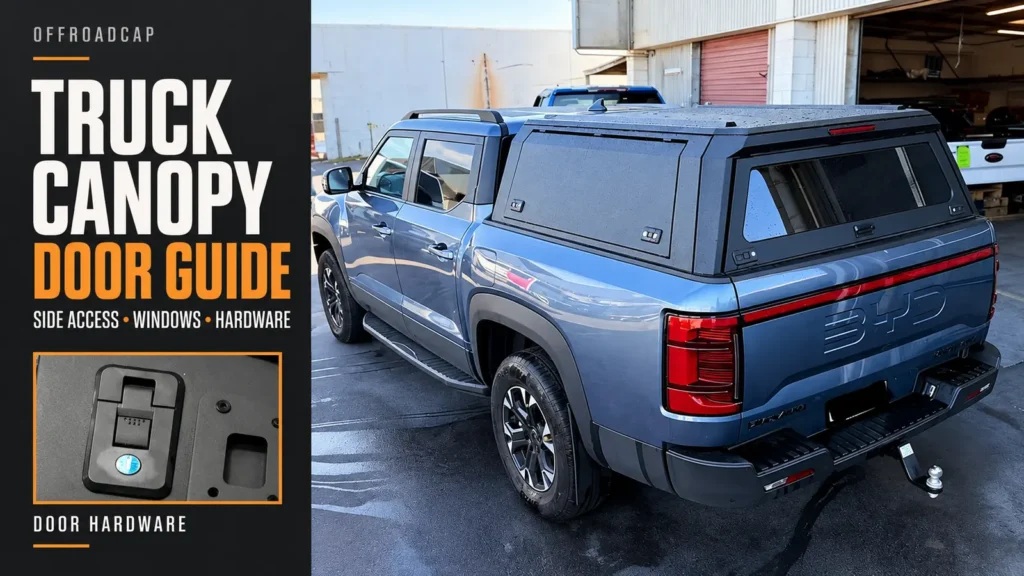
Our canopy side-door and hardware guide covers the wider door arrangement. Use the truck canopy seal guide when assessing seal seating and water-entry paths alongside the latch setting.
Double-Layer 2 mm Sheet-Metal Reinforcement Behind the Lock
The backing panel behind the featured lock uses double-layer construction with 2 mm sheet metal. This reinforces the local mounting area and the points through which the lock assembly transfers load into the door.
The design is intended to strengthen the locking point and improve resistance to prying around the lock mounting area. It addresses the supporting structure behind the visible hardware, so buyers should inspect the inside of the panel as well as the outside handle.
When comparing samples, ask to see the layers, mounting positions and how the reinforcement is incorporated into the door. A section drawing or an assembly photograph is useful for showing details that a finished exterior photograph cannot reveal.
Assess the reinforcement together with the extended latch, its mating surface and the frame. Any quantified forced-entry claim should be supported by a test identifying the complete assembly, applied conditions and result. The construction features themselves are not a published forced-entry rating.
Specify Keys and Central Locking Alongside the Mechanical Design
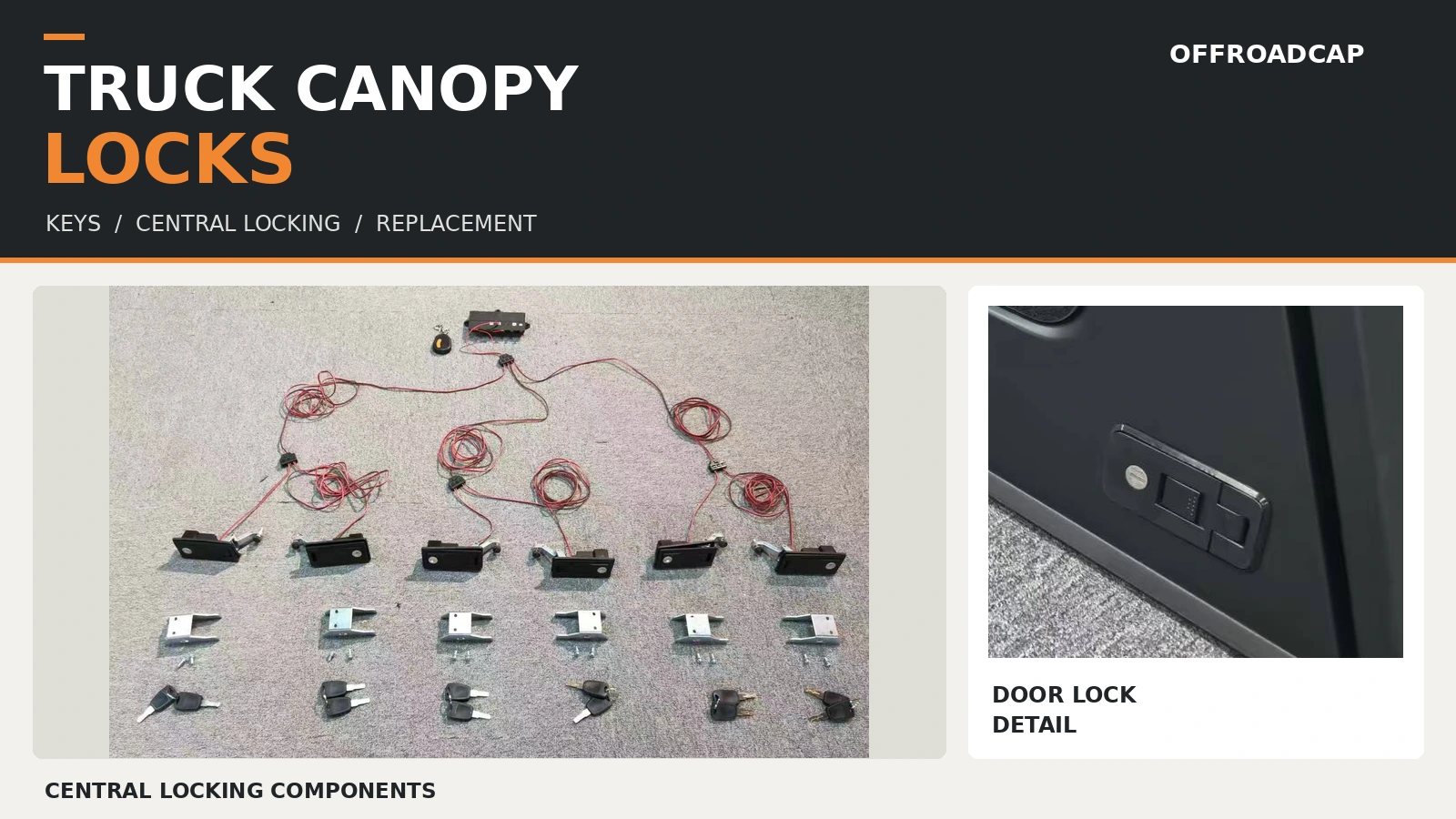
Mechanical reinforcement and access convenience are separate specification items. A keyed-alike arrangement means the specified locks can share a key. Powered central locking coordinates the connected locking mechanisms. Confirm which features are included in the selected canopy package.
The OFFROADCAP Central Locking System PB30200 listing identifies a 12V DC system for most PB Series high-canopy models. For the quoted application, confirm the compatible mechanical hardware, controlled doors, actuators, harness and vehicle-side connections.
For fleet orders, record the required key groups and who needs access. For powered operation, confirm the controls supplied, any integration with the truck’s original remote and the documented access method when electrical power is unavailable.
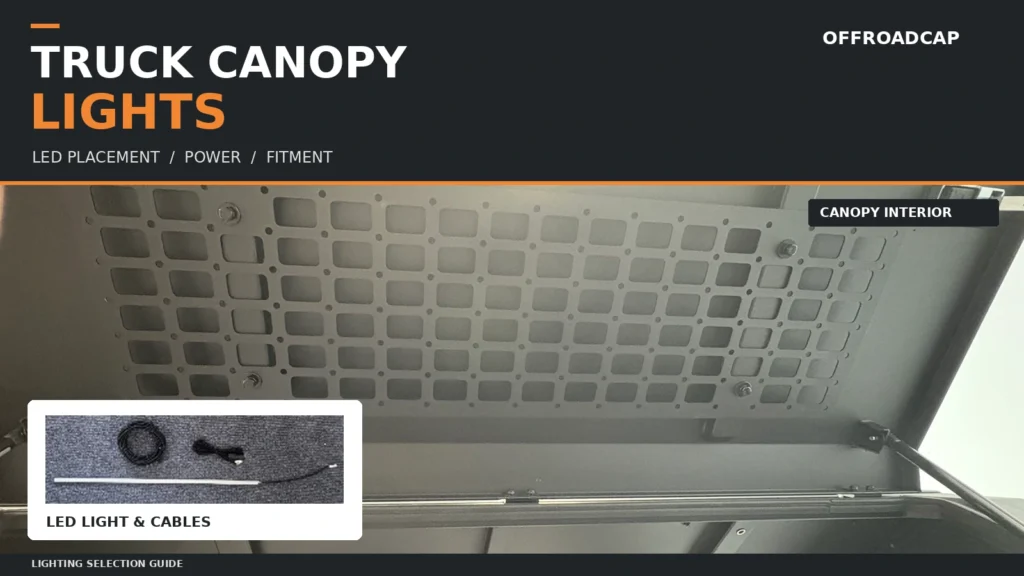
Plan the wiring alongside the canopy lighting and electrical package. The installer should review the combined supply and cable routing, including clearance around moving latches.
Truck Canopy Lock Replacement: Preserve the Complete Fit
A truck canopy lock replacement needs to match more than the visible faceplate. Check the lock-body dimensions, door cutout, panel build-up, fixing pattern, rear latch reach and adjustment arrangement.
A truck canopy locking handle that looks similar can still have different mounting geometry or a rear mechanism that does not suit the reinforced panel. Provide the original part reference and photographs from both sides of the door before ordering.
Send the supplier:
- The canopy series, model and original order or serial reference.
- The truck make, model, year, cab type and bed size.
- The affected door position and a description of the fault.
- Photographs of the lock body, extended latch, adjustment nut and backing-panel arrangement.
- The required key matching and any existing powered-locking equipment.
After fitting, check the latch setting, door operation and seal contact using the approved procedure. Follow our canopy installation guide alongside the model-specific instructions when inspecting the completed vehicle installation.
What Dealers and Installers Should Record
Make the three structural features visible in the sample review. Record the lock assembly’s dimensions, photograph the rear latch and adjustment provision, and document the double-layer backing panel.
Then check each fitted door for closing effort, latch engagement and key operation. Where central locking is specified, include powered operation and the documented manual-access arrangement in the handover checks.
Keep factory-fitted hardware, optional electrical equipment and service parts on separate lines in the order. A lock cover is a separate accessory; it should not be confused with the reinforced backing panel behind the lock.
For repeat orders, retain the approved configuration and component references. Our OEM truck cap supply guide explains the wider process for confirming configuration and after-sales support.
Frequently Asked Questions About Truck Canopy Locks
What does the 50 × 100 mm measurement refer to?
It describes the stated size of the featured lock assembly. Use the component drawing to confirm the external dimensions, mounting cutout and rear clearances for the selected canopy.
Can the closing tightness be adjusted?
Yes. The featured rear latch mechanism includes a nut for adjusting closing tightness. The installer should use the approved procedure and check engagement, closing effort and seal contact together.
Why reinforce the panel behind a truck canopy door lock?
The panel supports the mounted lock. OFFROADCAP’s featured double-layer construction uses 2 mm sheet metal to reinforce that mounting zone and is designed to improve resistance to prying at the locking point.
Do these structural features mean central locking is included?
Confirm that separately in the quotation. The lock assembly, extended latch and reinforcement describe the mechanical construction. Powered operation needs its own compatible components and electrical package.
Can a truck canopy T handle lock replace this assembly?
Handle style alone does not establish compatibility. Match the approved cutout, fixing pattern, panel construction, latch geometry and key requirements before selecting a replacement.
Compare the Lock Body, Latch and Reinforcement Together
OFFROADCAP’s featured truck canopy locks combine a larger, thicker lock assembly with an extended adjustable latch and a double-layer reinforced mounting panel. These details give buyers specific construction features to inspect when selecting a canopy and planning spare parts.
Send OFFROADCAP your canopy requirements with the vehicle details, preferred door layout, key arrangement and order quantity. Request the corresponding lock specification and assembly details so the mechanical construction and optional powered-locking package are clear before ordering.