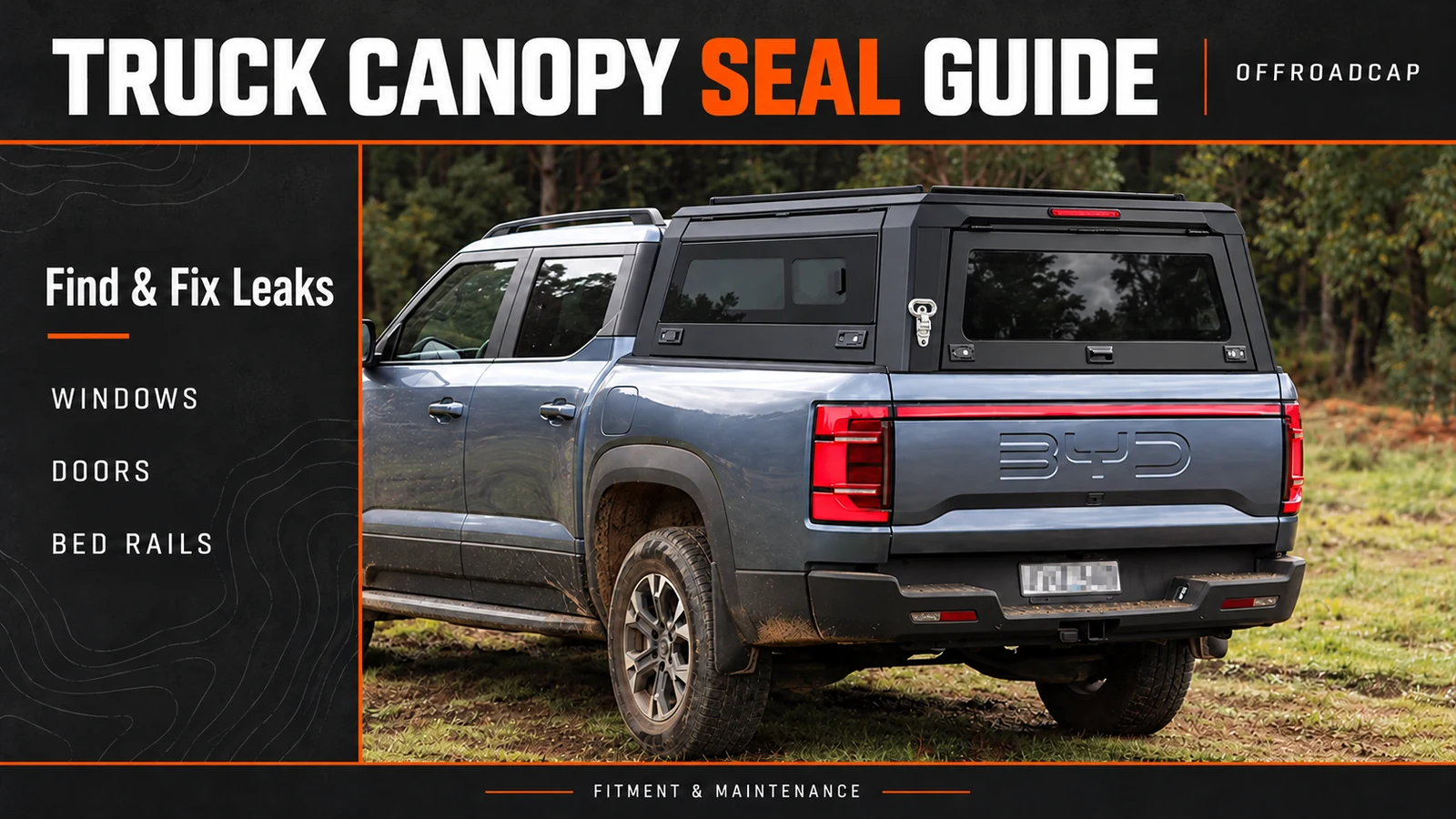
A truck canopy seal helps manage the gaps between the enclosure, its openings and the pickup bed. When water enters, the first task is to identify the entry point. A wet rear corner may involve the door seal, the tailgate opening or the canopy-to-bed joint, and each needs a different check.
This guide explains how to inspect common sealing locations, select replacement parts and approach a leaking canopy without guessing. For the wider buying checklist covering height, construction and vehicle fitment, start with our high-rise truck cap buyer’s guide.
Where Does a Truck Canopy Need Sealing?
Think of weather protection as a set of interfaces. The canopy base meets the bed rails; windows and doors sit in separate openings; the factory tailgate closes below the rear canopy door. One replacement gasket may address only one of these locations.
| Location | What to inspect | What to confirm before ordering |
|---|---|---|
| Canopy base and bed rails | Interrupted tape, lifted edges, uneven contact and rail-cap interference | Approved tape profile, thickness and mounting arrangement |
| Front bulkhead | Changes in surface height and gaps near the front corners | Vehicle-specific sealing detail |
| Window opening | Gasket condition, frame joints and designated drainage outlets | Window assembly type and replacement part |
| Rear and side doors | Seal seating, corner joints, latch alignment and contact around the opening | Door seal profile and fitting method |
| Factory tailgate | Side and lower gaps separate from the canopy door | Compatible tailgate seal kit |
| Accessory penetrations | Roof mounts, cable entries and disturbed sealing components | Approved gasket or resealing procedure |
Vehicle fitment matters throughout these checks. Record the make, model, year, cab type and bed length, together with the canopy series or part number. A model name alone is insufficient for selecting a complete enclosure or its vehicle-specific fitting kit.
How to Fix a Leaking Truck Canopy: Find the Entry Point First
Before applying sealant, document where moisture appears and under which conditions. Does it happen in rain, after washing, while driving or only overnight? Does the problem start at one corner or across several surfaces?
- Dry and inspect the interior. Remove loose cargo so the first visible moisture can be located. Photograph the area before any repair.
- Check the fit. Look for a displaced base, doors that need force to close, pinched seals or accessories interfering with the opening.
- Inspect the nearest interfaces. Follow the seam upward and outward from the wet area. Water can travel before reaching the point where it becomes visible.
- Use the supplier’s water-check procedure. If a gentle hose check is permitted, inspect one area at a time with an observer inside. Avoid directing a pressure washer into joints, vents or seals.
- Record the first entry point. Note the exact seam, fitting or opening involved. Repair that interface using the specified parts and procedure, then repeat the same check.
Moisture on several interior surfaces can also require a condensation check. A hose test helps investigate external ingress; it does not establish the cause of every damp interior. Record ventilation, wet equipment and overnight conditions when discussing the issue with the supplier.
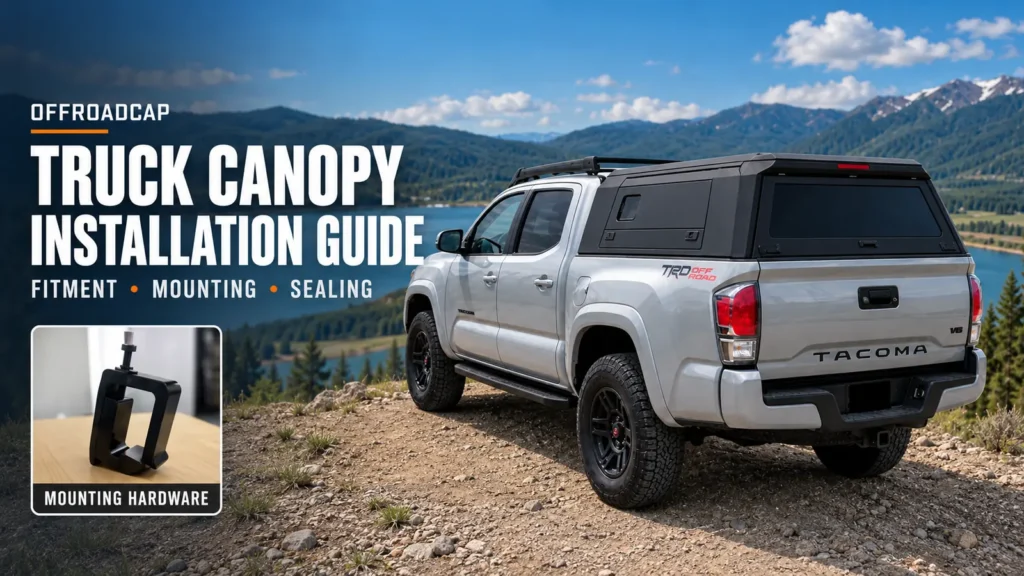
For base alignment, brackets and mounting hardware, refer to our truck canopy installation guide. Obtain the specified torque before changing fastener tension. Tightening harder is not a substitute for correcting fitment.
Truck Canopy Window Seal: Check the Assembly Type
A truck canopy window seal must match the window assembly. Fixed glazing, sliding windows and opening panels can use different profiles and attachment methods. Identify which part of the assembly is leaking before ordering a rubber strip.
Inspect for displaced gasket sections, damaged corners and debris around the frame. Where the assembly has designated drainage outlets, check them according to its instructions. Do not fill an opening simply because it looks like a gap.
When requesting a replacement, send photographs of the complete window, the affected corner and the seal profile. Include any window identification label. If the repair involves removing glass or a bonded assembly, obtain the supplier’s service procedure and use an installer equipped for that work.
Truck Canopy Door Seal: Check Contact and Alignment
A truck canopy door seal needs consistent contact around its intended sealing surface. Inspect whether it is fully seated, whether the corner joints meet correctly and whether cargo or accessories stop the door from closing properly.
Open and close the door while watching its clearance and latch engagement. A visible gap may result from a displaced seal, an alignment issue or the wrong replacement profile. A thicker strip can interfere with closure, so choose the approved profile rather than the largest one available.
Keep the rear canopy door and the factory tailgate separate in your diagnosis. A functioning upper door seal does not by itself address gaps around the lower tailgate. Confirm whether a compatible tailgate kit forms part of the selected installation.
Choosing Truck Canopy Seal Tape for the Bed Rails
Truck canopy seal tape is used in some installations between the canopy base and its support surface. Before replacing it, confirm the supplier’s requirements for the selected canopy and vehicle.
- Profile and dimensions: match the specified contact width and installed compression.
- Material compatibility: confirm suitability for the relevant coatings, rail caps and exposure conditions.
- Surface preparation: follow the tape manufacturer’s cleaning and application requirements.
- Corner and joint treatment: obtain the detail for transitions and joins.
- Installation timing: follow any temperature, bonding or curing requirements before checking the seal.
The term truck canopy sealing tape does not identify one universal specification. Avoid stacking layers to compensate for an unresolved mismatch unless that arrangement is explicitly approved. Where replacement requires lifting the canopy, follow the approved handling and mounting procedure.
Should You Add Sealant Around Every Gap?
Locate the leak first and ask which repair material is approved for that interface. Some joints use replaceable compression seals, while others require a specified sealing compound or assembly repair. Covering every seam can make future inspection and servicing more difficult.
Confirm compatibility with the metal, paint, rubber and glazing involved. Keep designated drainage and ventilation paths in their intended condition. Any proposal to alter factory bed openings should follow guidance for the particular vehicle and canopy installation.
If moisture first appears after adding roof equipment, inspect the relevant attachment points using the accessory instructions. Check the mounting hardware, any penetrations and the sealing components specified for that accessory.
What Buyers and Distributors Should Request
Before ordering a canopy for a fleet or dealer programme, ask for the sealing details alongside the vehicle fitment and product configuration. Useful documents include:
- A drawing showing the base, bulkhead and tailgate interfaces.
- The supplied seal profiles and their replacement part numbers.
- Installation, cleaning and maintenance instructions.
- The water-check method, test conditions and acceptance criteria for the quoted configuration.
- Instructions for doors, windows, roof equipment and wiring entries where fitted.
Request clarification of weather-resistance claims before using them in your own catalogue. A demonstration or description needs the corresponding configuration and test conditions to be meaningful.
For OEM orders, distinguish sealing components installed during production from vehicle-specific fitting parts supplied for installation. Record which items are included, which are optional and how replacements will be ordered.
Frequently Asked Questions
How do I choose the right truck canopy seal?
Identify the interface first: bed rail, window, door or tailgate. Then match the replacement to the canopy or opening assembly and confirm the approved profile and fitting method with the supplier.
How do I fix a leaking truck canopy?
Dry the interior, inspect the fit and locate the first entry point using the supplier’s inspection procedure. Replace or repair the affected interface, then repeat the check. Adding sealant before identifying the leak can leave the original cause unresolved.
Can I use one seal for both the window and door?
Only if the supplier specifies the same part for both assemblies. Similar appearance does not establish compatibility; the profile, attachment and working gap need to match.
Does a canopy seal also seal the tailgate?
A base or door seal addresses its own interface. The factory tailgate has separate gaps, so confirm whether its sealing components are included in the installation package.
Can a truck canopy be guaranteed completely waterproof?
Ask for the applicable claim, test method and conditions for the complete installed configuration. Do not infer a universal waterproof guarantee from the presence of rubber seals or a brief water-spray demonstration.
Discuss Your Vehicle Fitment and Sealing Requirements
When contacting OFFROADCAP, share the vehicle make, model, year, cab type and bed length, along with the intended canopy configuration. For a replacement-part enquiry, include the canopy identification and clear photographs of the affected seal and opening.
Fleet buyers, importers and OEM customers can also provide their installation requirements and intended operating conditions so the relevant fitting details can be reviewed before quotation. Send your canopy fitment and sealing enquiry.