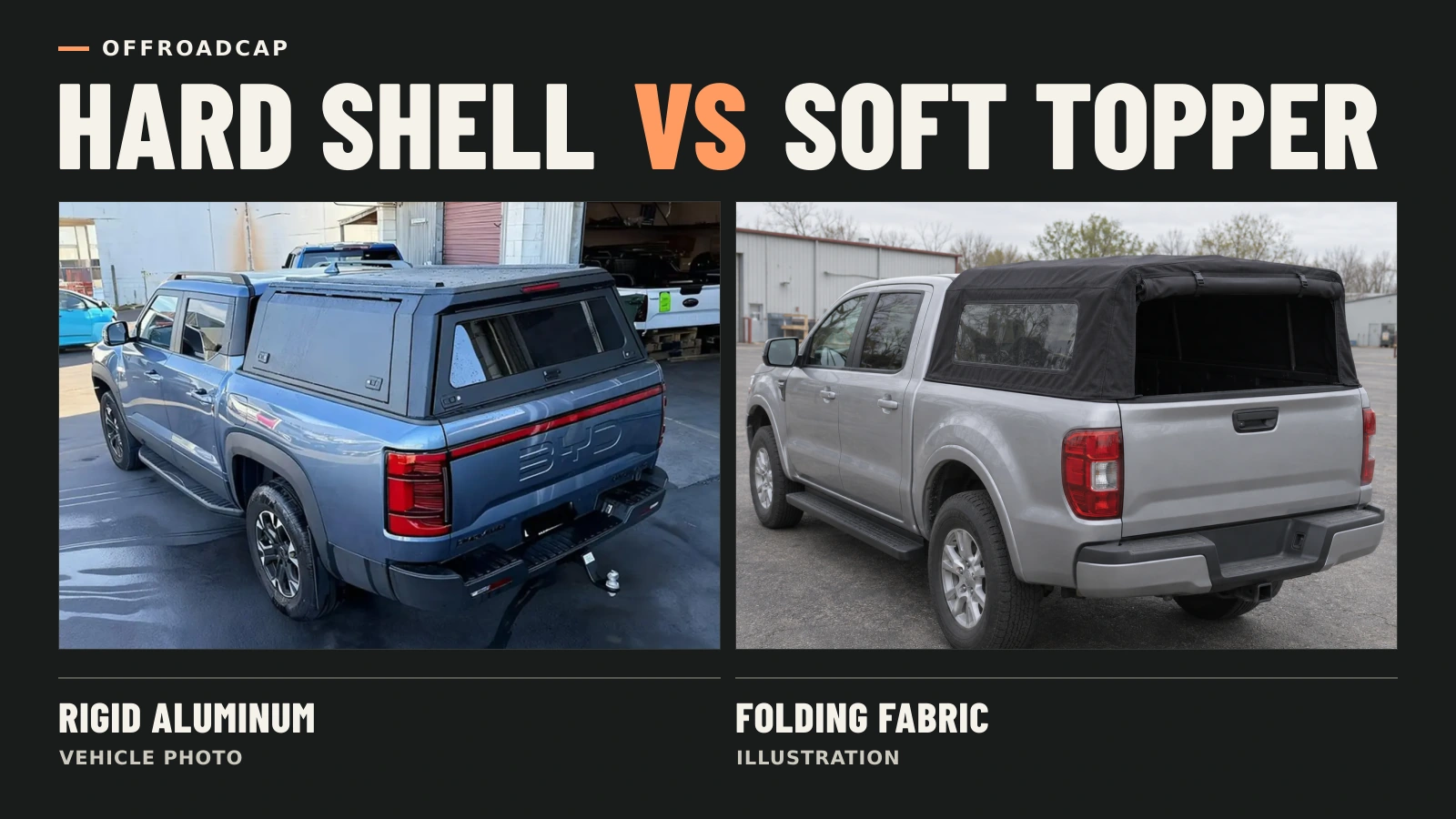
A hard shell truck topper makes sense if you want to keep the bed enclosed most of the week, reach equipment through rigid doors or fit accessories to an approved mounting system. A soft truck topper is worth comparing if you regularly need the bed open from above. On a folding model, the fabric and frame can stow on the truck so you can load taller items without removing a rigid shell.
Start with your two most common loads. If you carry tool cases during the week and pick up tall plants on Saturdays, measure the cases you need to reach with the tailgate closed and map where the folded topper would sit when you load the plants. That exercise tells you more than a comparison of catalog photos.
Hard Shell Truck Topper vs. Soft Truck Topper at a Glance
Hard toppers use a rigid enclosure, often made from aluminum or fiberglass. Door, window and rack options depend on how the shell is built. A soft topper uses a cover supported by a frame. Some frames fold back, and some designs let you roll up or remove individual panels. Ask to see the exact model in its loading and driving positions.
| Check | Hard shell truck topper | Folding fabric topper |
|---|---|---|
| Tall or awkward cargo | Check the hatch aperture and internal clearance. Ask how the cap can be removed when the open bed is needed. | Check where the folded frame rests and how much open length remains. |
| Side access | Check the clear opening, door swing and reach to the gear you use most. | Check whether the side panel rolls up or detaches, and where it stows. |
| Covered storage | Test the hatch, side doors, latches and the vehicle tailgate together. | Check the closure system and plan separate locked storage if required. |
| Rack or accessory mounting | Verify the exact shell, rails, mounting kit and intended load as a system. | Verify interference with a compatible rack and with the frame’s folding path. |
| Service parts | Ask for hardware, glass, seals and finish details by model. | Ask whether fabric panels, windows, frame parts and closures can be ordered individually. |
Measure the Loading Path and the Folding Footprint
Measure your largest item with its handles, wheels and any protective case included. Then trace how it goes into the truck. A tall storage case may fit inside a rigid shell after you tilt it, yet catch on the top edge of the rear opening during loading. If you lift a case through a side door, check the space between the bed rail and the lower edge of the raised door.
Ask for two dimensions on a folding truck topper: the length occupied by the stowed frame and the portion of the bed rails that stays covered by its hardware. A folded frame near the cab can take up the same space you need for a tall load. Look at the folding path with any tie-downs, crossbars and bed dividers already installed. Confirm how the frame must be secured and which positions the manufacturer permits while driving.
For example, a landscaper might carry small supplies under a soft truck topper in the morning and load tall plants in the afternoon. Before choosing, position the biggest container where it will ride and check whether the folded fabric or its support bars get in the way. A service technician with two heavy cases used on every call may care more about reaching both from the curbside without shifting either case.
If a rigid roof fits your routine but leaves little overhead room, compare the dimensions in the cab-high and high-rise truck cap guide. Measure the rear opening as well as the roof height. A taller roof does not necessarily give you a taller loading opening.
Test Side Access With the Gear in Place
Stand where you can reasonably park and work. For a rigid side door, check how far it swings, whether you can reach its handle when open and whether a shelf or organizer reduces the opening. For a soft camper shell, try rolling or removing the side panel, then check where it is held or stored while you work. Compare how many actions it takes to get a frequently used item out and close the bed again.
If you park in narrow loading bays, measure the space available beside the truck at the door or panel you use. The rear may be the easiest access point on one job and unreachable on the next. If you spend most of the day working from the side, position the gear you use most within the actual opening and leave the rear for larger items. The truck canopy side-door guide shows how to compare openings and door hardware.
Decide what needs to be out of sight and where it will be locked. With a hard shell truck topper, inspect the panel material, glazing, lock engagement and tailgate together. With a soft enclosure, verify what the closures secure and whether you need a separate lockable box. If you use one, check whether its lid can open under the frame or roof with the rest of the equipment loaded.
Compare Fabric Upkeep, Seals and Service Parts
If a listing calls the product a canvas truck topper, ask what the cover is actually made of, how it should be cleaned and which parts can be replaced. Inspect the rear closure, the bed-rail interface and any removable window panels. Ask the supplier how the material and clear panels should be handled in cold weather and how to store a cover that was folded while wet.
On a rigid shell, look at the seal where it meets the bed rails, the seals around opening panels and the path water can take around the truck’s tailgate. Review the fitted truck if you can. A sample shown on a stand does not show how the actual bed liner and rail caps affect contact. If you carry water-sensitive items, establish what protection the installed configuration provides and whether specific cases need their own sealed containers.
For repeat orders, ask for a part reference and ordering process for the components you expect to service. A list of replaceable parts is most useful when it identifies which panel, glass, latch or seal goes with the exact topper revision. Before buying a used setup, check that the previous owner still has the vehicle-specific rails, clamps and closure hardware.
Check Racks and Accessories as an Installed System
Identify what supports each accessory. A rack can be carried by a compatible rigid shell or supported separately from the truck bed. If you already own a rack, check where its brackets clamp and whether the new topper uses that space. With a folding cover, confirm both rack clearance and the room needed to release, fold and secure the cover.
For roof equipment, ask the relevant manufacturers to identify the approved mounting points and limits for the full setup, including any applicable driving and parked conditions. The OFFROADCAP roof rack and load capacity guide explains how to compare the hardware and installed equipment together. If a rack, side shelf or organizer appears in a product photo, confirm whether it is included in the quotation.
Plan how the truck will change roles. For a rigid cap that may need to come off, ask for its configured weight, the manufacturer’s removal instructions and the equipment or assistance required. Include a suitable storage location while the cap is off. For a folding design, ask what remains on the bed rails and how that affects any future equipment you plan to fit.
Run a Loading Trial Before Choosing
Try a normal workday with both layouts in mind. Put the biggest item in first, secure it at the truck’s designated tie-down points, then load the items you pick up along the route. Check that you can close every panel and reach your tie-downs afterward. Unload in the order you actually work. If the item you need first is blocked by another case, try moving it to a side opening and repeat the test.
Then test the trip that needs the most space. A shop might carry shallow parts bins in an enclosed bed most days and collect a tall display crate once a month. The decision turns on how long the change takes and where the folded frame or removed cap goes. For several vehicles, note who will do the changeover at each location and whether the same storage or handling equipment is available there. That can help you decide which trucks should share a specification.
What Dealers and Upfitters Should Ask for in a Quote
Use the same truck and cargo list when comparing both designs. If a customer is ordering several vehicles, keep the fitment details attached to each line item. A bed-rail cap, factory track or liner that looks similar in a photograph can change whether the proposed hardware fits.
- Vehicle details. Record the market, make, model, model year, cab type and bed length. Include photos of both rails, the front wall of the bed and the tailgate.
- Access dimensions. Give the largest load dimensions and order of use. Ask for the clear rear and side openings or the footprint of the folded assembly.
- Included equipment. List the top, mounting hardware, locks, windows and accessories separately. Ask which parts arrive installed and which the shop fits.
- Operating and service information. Request instructions for the exact configuration, stated accessory limits and part references for items you expect to replace.
- First installation. On the first truck, open every panel, load the largest item and verify access to retained accessories. Record the accepted parts and configuration before placing the repeat order.
For a rigid aluminum setup, browse the OFFROADCAP canopy range. The Adventure Series shows an aluminum side-door layout, while the Overland Series uses a smaller sliding side window. Compare those openings against the items you need to reach. Confirm the available door, window and mounting options for your vehicle when requesting a quote.
Hard and Soft Truck Topper FAQs
Can I leave a folding topper on the truck when I need the bed open?
Some folding models are made to stow on their own rails. Confirm the stowed footprint and the approved way to secure it, then check whether your cargo, tie-downs and rack still fit. Ask for the manufacturer’s instructions for the positions permitted during travel.
Does a hard shell truck topper always give better weather protection?
Compare the fitted closures, seals and gaps around the actual truck bed. A rigid shell and a fabric cover use different closure systems, and either can have gaps at the interface with the pickup. Ask what was checked on the installed configuration and how to inspect the seals over time.
Can I use my existing bed rack with a soft camper shell?
Check both manufacturers’ fitment information. Make sure rack feet and topper rails can coexist, and that the fabric and frame clear the rack in every required position. Compare the full assembly with the accessories fitted before ordering.
Request a Rigid Canopy Fitment Review
If your work or travel is better served by a rigid topper, contact OFFROADCAP with your truck details, bed-rail photos, largest cargo dimensions and preferred access points. Include any racks and bed accessories you plan to keep. For a dealer or fleet project, add the quantity and the door, window and hardware choices you want priced.