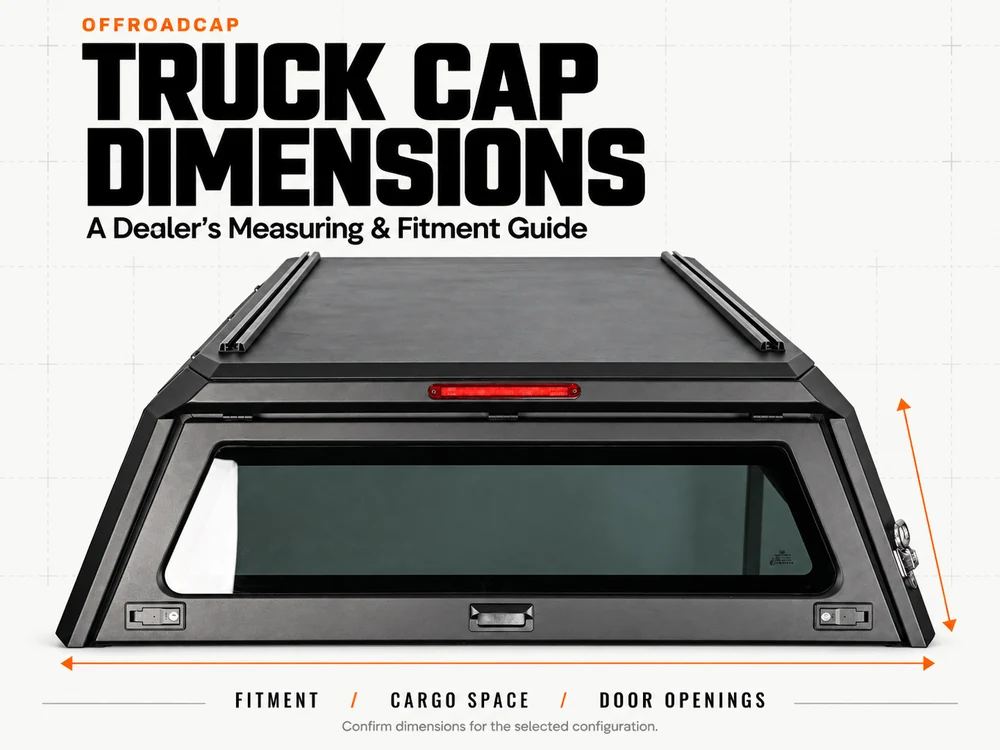
Truck cap dimensions should answer three purchasing questions: will the canopy fit the truck, will the equipment fit inside, and will the completed vehicle clear the places it needs to enter? A bed-length label alone cannot answer all three.
For dealers and importers, the useful starting point is a vehicle-specific measurement record linked to a canopy drawing. This guide explains which dimensions to request, how to separate them from shipping information and what to verify on a sample. For construction and the wider buying checklist, start with our aluminum canopy buyer’s guide.
Separate the Different Types of Truck Cap Dimensions
Before comparing figures, identify what each measurement describes. External length, usable cargo length and carton length belong in different fields. Record the unit, measurement points and fitted configuration beside every number.
| Measurement group | What to record | Purchasing decision |
|---|---|---|
| Vehicle interface | Bed-rail contact surfaces, front and rear geometry, tailgate relationship and mounting locations. | Does the specified canopy and fitting arrangement match this truck? |
| Canopy exterior | Overall length, width and height, with the measurement points shown. | What envelope does the enclosure occupy? |
| Usable interior | Clear length, width and height at the positions needed by the cargo. | Can the equipment be carried in the approved layout? |
| Door openings | Clear rear and side openings, plus the space needed to operate the doors. | Can users load and retrieve the equipment? |
| Completed vehicle | Overall height with the selected roof equipment fitted, and required operating clearances. | Can the vehicle enter its garage, workshop or parking area? |
| Shipping packages | External packed dimensions for every package and any protective frame. | How should transport and handling be planned? |
Keep dimensions tied to the quoted configuration. A measurement taken before storage accessories are installed may not describe the final usable space.
Truck Canopy Sizes: Bed Labels Are Only the Starting Point
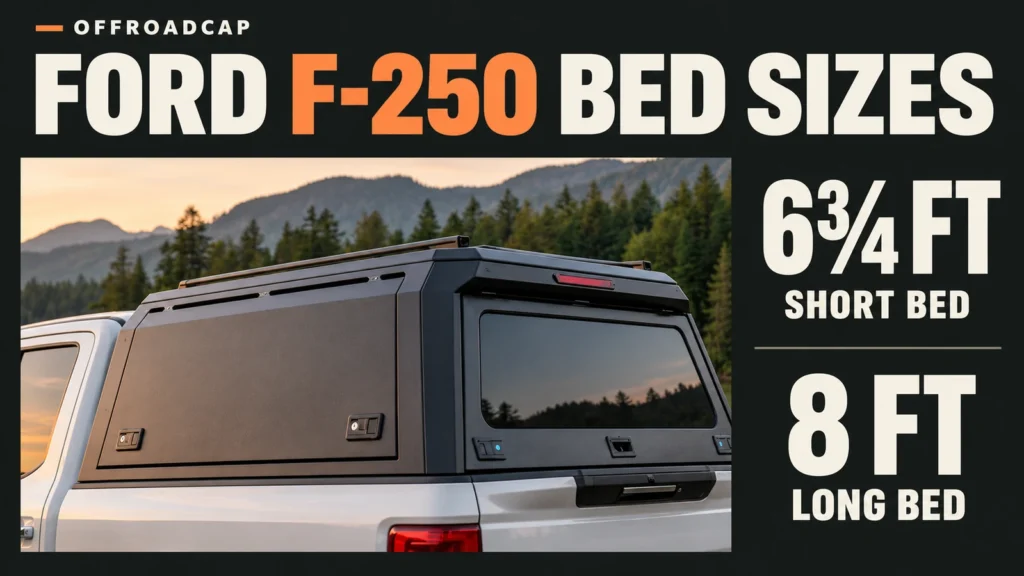
OFFROADCAP’s published range includes Ford F-150 applications labelled 5.5FT and 6.5FT, as well as a Toyota Tundra application labelled 5.5FT. These entries illustrate two separate checks: one vehicle family can have different bed applications, and different trucks can share the same nominal length label.
- Ford F-150 2015+ 5.5FT canopy listing.
- Ford F-150 2015+ 6.5FT canopy listing.
- Toyota Tundra 2014+ 5.5FT canopy listing.
Match make, model, model year, cab type and bed specification before asking for the corresponding drawing. Have the team confirm the applicable generation and configuration rather than treating an open-ended year label as approval for every later truck.
When comparing truck canopy sizes, use feet as an application label where that is how the range is organised. For example, 8 feet converts to 96 inches or 2,438.4 mm. That conversion does not establish an actual mounting dimension or clear interior length. Our 8FT canopy guide covers long-bed applications.
Measure the Truck Interface From Agreed Reference Points
Ask the supplier to mark the required measurement points on a sketch or drawing before collecting vehicle data. “Bed width” can mean the distance between inner walls, the rail-top span or an outside dimension. The record needs to identify which one was measured.
Photograph the front wall, both bed rails, rear corners and tailgate area. Record any liner, rail cap, factory track or existing accessory that affects the mounting surface. Include the vehicle identification details with those photographs.
Where requested on the measurement sheet, record front and rear widths separately and show any diagonal measurements. Let the supplier define how the data will be used to assess fitment. Similar tape readings do not establish that two vehicles share the same rail profiles or mounting arrangement.
Compare the resulting truck cap dimensions with the proposed fitting system. Our canopy clamp and mounting guide explains the interface checks; the selected model’s instructions should determine the actual installation procedure.
Check the Loading Route and the Finished Interior
Start with the largest regularly carried item, including its handles, wheels or protective case. Record the orientation in which it will pass through the opening and where it must sit during transport.
Request the clear opening dimensions with seals, frames and hardware in place. Then check the route from that opening to the intended storage position. An enclosure’s widest or tallest point may be away from the route the equipment must follow.
Repeat the check with the proposed shelves, boxes and hanging panels included. Record the narrowest usable width and the available height where the cargo will actually sit. Leave the handling space required by the task rather than assuming a close geometric fit is practical.
OFFROADCAP’s storage planning guide covers equipment layouts. For side openings and moving hardware, use the canopy door and side-access guide.
Confirm Installed Height and Door Operating Space
Canopy height needs a stated reference point. Height above the bed rail, interior height above the bed floor and overall vehicle height answer different questions. Ask the drawing to distinguish them.
For garage access, check the completed vehicle with the selected roof equipment fitted. Compare it with the actual entry route and lowest obstruction, including door mechanisms. Agree the necessary clearance for the operating conditions with the installer or site operator.
Also review where doors open. A side door may need space beside the vehicle even when its closed dimensions fit the parking bay. Check the intended workshop, loading position or service location. Our roof-height comparison guide discusses the choice between roof profiles.
Keep Packaging Dimensions in the Logistics Record
OFFROADCAP’s supplied product list separates body and roof packages and includes columns for carton dimensions and dimensions with wooden-frame protection. Those headings identify shipping measurements. They should not be copied into a dealer listing as the assembled canopy’s length, width or height.
Ask for an assembled-product drawing for fitment and a current packing list for freight. Match both documents to the same order configuration. Any additional accessory packages need their own entries. For quotation scope and packing comparisons, see our B2B supplier quote guide.
Approve the Drawing and Recheck the Sample
Before a batch order, request a drawing reference, revision and measurement schedule for the selected canopy. Agree which dimensions are critical, their reference points and the acceptance tolerances. Do not apply one assumed tolerance to every measurement.
Check the sample against that agreed record. Confirm vehicle fitment, door operation and representative equipment access with the intended accessories installed. Record any changes and obtain the revised specification before using the sample as the reference for repeat orders.
This measurement schedule is a proposed purchasing workflow, to be agreed with the supplier for the project. It should accompany the product specification and installation instructions.
Frequently Asked Questions About Truck Cap Dimensions
Are all 5.5FT truck caps the same size?
No. A shared nominal bed-length label does not confirm matching width, rail shape, tailgate geometry or mounting points. Verify the exact truck application and canopy drawing.
Can carton dimensions tell me whether the canopy fits my truck?
No. Carton dimensions describe a shipping package. Request the assembled dimensions and vehicle-specific mounting information for the selected canopy.
Which measurements should a dealer request first?
Begin with the exact vehicle specification and the supplier’s required interface measurements. Then request clear cargo dimensions, door openings and installed-height information for the intended configuration.
Request Truck Cap Dimensions for Your Dealer Project
Send OFFROADCAP the vehicle make, model, year, cab type and bed specification, together with bed-rail photographs. Add the dimensions of the main equipment, preferred access layout, roof accessories and quantity per application.
Contact OFFROADCAP to discuss the measurement and fitment requirements. Ask for the applicable drawing, confirmed configuration and packaging information so your purchasing team can review each dimension in its proper context.