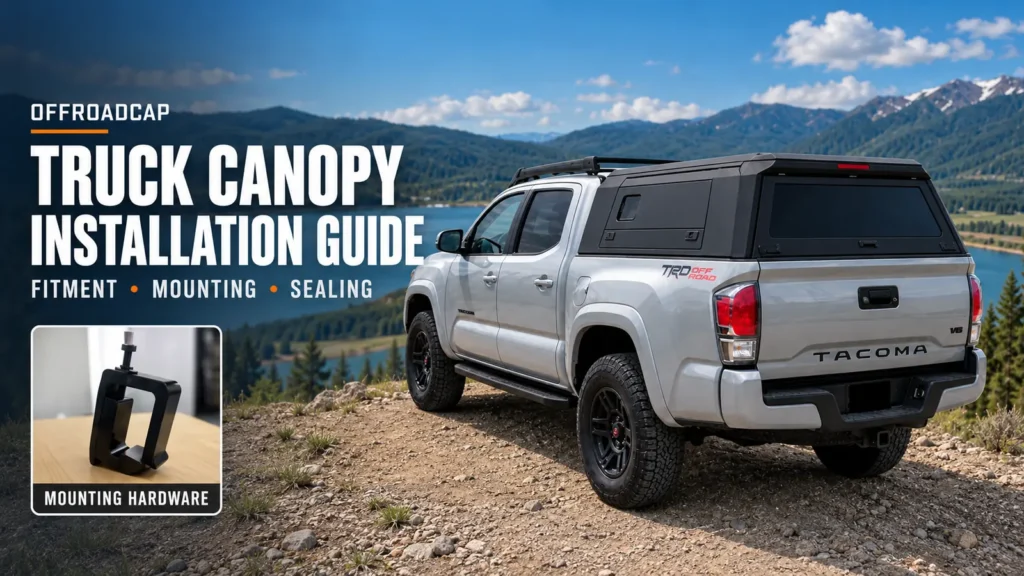
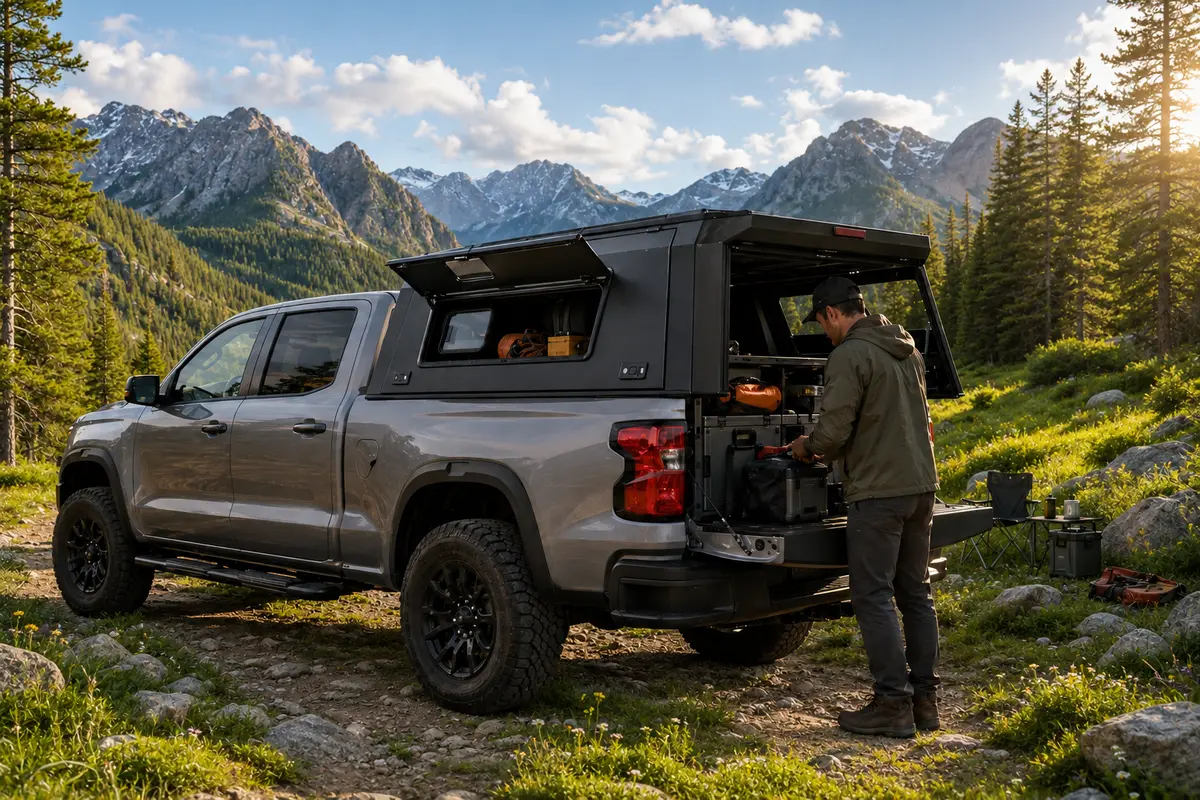
The best off-road canopy should do more than cover the bed of your pickup truck. It should protect equipment, improve storage, support your travel setup, and remain dependable on rough roads and in changing weather.
Whether you are preparing for weekend camping, long-distance overlanding, remote-area travel, or daily work, choosing the right canopy requires careful consideration of fitment, materials, access, security, roof capacity, and accessories.
This guide explains the most important features to evaluate before choosing an off-road pickup canopy.
1. Start with How You Use Your Pickup
The right canopy depends on how the vehicle will be used. A simple camping setup may only require dry storage and easy access, while a long-distance overlanding build may need roof-mounted equipment, interior lighting, secure side doors, and organized storage.
Common applications include:
- Weekend camping
- Long-distance overlanding
- Off-road exploration
- Fishing and outdoor sports
- Commercial and service work
- Fleet and utility vehicles
- Daily secure cargo storage
Before comparing products, list the equipment you regularly carry and how often you need to access it.
2. Confirm Exact Vehicle Fitment
A canopy must match the pickup truck’s bed dimensions and body shape. Poor fitment can cause installation problems, water leakage, excessive vibration, or an uneven appearance.
Always confirm:
- Vehicle manufacturer
- Vehicle model
- Production year
- Cab configuration
- Truck bed length
- Bed-rail dimensions
- Existing bed accessories
- Tailgate and rear-door clearance
Do not assume that canopies designed for similar-looking trucks will fit correctly. Even vehicles within the same model family may have different bed dimensions or mounting points.
OFFROADCAP’s Pickup Canopy Series provides different configurations for pickup applications and vehicle fitment requirements.
3. Choose a Durable, Lightweight Structure
An off-road canopy needs enough strength for vibration, uneven roads, cargo movement, and outdoor conditions. At the same time, excessive weight can affect payload capacity and vehicle handling.
Aluminum is widely used for premium truck canopies because it offers a useful combination of:
- Relatively low weight
- Structural strength
- Corrosion resistance
- Clean appearance
- Customization flexibility
- Suitability for powder-coated finishes
When evaluating an aluminum canopy, examine the frame, panel construction, welding, hinges, locks, door reinforcement, and mounting areas—not only the exterior appearance.
4. Evaluate Weather Protection
Outdoor equipment must remain protected from rain, dust, wind, and changing temperatures. The canopy’s weather resistance depends on its complete sealing system.
Check the following areas:
- Door and window seals
- Roof and corner joints
- Rear-door sealing
- Mounting surfaces
- Lock and handle openings
- Drainage design
- Powder-coating coverage
A good canopy should have consistent sealing around every opening. Weather protection is especially important when carrying camping equipment, tools, electronics, clothing, or recovery gear.
5. Select the Right Side Access
Side access can make a major difference in everyday use. Without side doors or windows, equipment stored near the front of the truck bed may be difficult to reach.
Common side configurations include:
Pop-Up Side Windows
Pop-up windows provide a large opening and convenient access to equipment. They are useful for camping, service vehicles, and organized storage systems.
Sliding Windows
Sliding windows improve ventilation and allow limited access without opening an entire side panel.
Solid Side Doors
Solid aluminum side doors provide additional privacy and security. They are suitable for valuable tools, commercial equipment, or harsh working conditions.
Choose the configuration according to the balance of ventilation, visibility, security, and access that your application requires.
6. Consider Security and Locking
An off-road canopy may carry expensive camping gear, tools, recovery equipment, or personal belongings. Strong locks and reinforced access points are therefore essential.
Evaluate:
- Lock construction
- Handle quality
- Hinge strength
- Door-frame reinforcement
- Central locking compatibility
- Emergency access
- Replacement lock availability
If the vehicle is frequently parked outdoors or used for commercial work, prioritize solid construction and lockable storage over decorative features.
7. Check Roof Load and Rack Compatibility
Many off-road users mount equipment on top of the canopy, including:
- Roof racks
- Crossbars
- Luggage baskets
- Recovery boards
- Awning systems
- Camping equipment
- Solar panels
- Rooftop tents
Before installing roof-mounted equipment, confirm the manufacturer’s static and dynamic load ratings. The rating should cover the complete system, including the canopy structure, mounting points, rack, and vehicle.
Never assume that every canopy can safely support a rooftop tent or heavy cargo without reinforcement.
Explore compatible Luggage Racks and related mounting solutions when planning your complete setup.
8. Plan Interior Storage and Accessories
A modular interior makes it easier to adapt the canopy to different trips and working conditions.
Useful accessories may include:
- Interior LED lighting
- MOLLE panels
- Storage boxes
- Bed drawer systems
- Side hanging panels
- Central locking systems
- Roof rails
- Utility mounting brackets
- Window screens
- Cargo dividers
The OFFROADCAP Accessories Series includes options designed to improve storage, access, security, and everyday utility.
It is usually better to plan the accessory layout before installation rather than adding unrelated components later.
9. Review Installation Requirements
A well-designed canopy should have a clear mounting method and complete installation hardware.
Before purchasing, ask:
- Is drilling required?
- Is the mounting kit included?
- Can the canopy be removed later?
- Are installation instructions provided?
- Does the installation affect the truck bed?
- Are replacement seals and mounting parts available?
- Is professional installation recommended?
Correct installation helps prevent movement, noise, leakage, and damage to the vehicle.
10. Think About Long-Term Support
An off-road canopy is a long-term vehicle accessory. Buyers should consider whether replacement hardware, locks, seals, windows, and accessories will remain available.
A dependable manufacturer or supplier should provide:
- Installation documentation
- Fitment confirmation
- Product specifications
- Replacement parts
- Accessory compatibility information
- Technical support
- Warranty information
- After-sales assistance
This is especially important for distributors, fleet operators, and buyers managing multiple vehicles.
Off-Road Canopy Buying Checklist
Before choosing your canopy, confirm:
- It fits the exact pickup model and bed size.
- The structure is strong without adding unnecessary weight.
- Doors, windows, and joints are properly sealed.
- Side access matches the way you organize equipment.
- Locks provide suitable cargo security.
- The roof system supports your intended equipment.
- Accessories are compatible and easy to replace.
- Installation hardware and instructions are included.
- Technical and after-sales support are available.
Build a Canopy Around Your Adventure
The best off-road canopy is not necessarily the one with the most features. It is the one that fits your vehicle, protects your equipment, supports your travel style, and can be adapted as your needs change.
OFFROADCAP develops aluminum pickup canopies and accessories for overlanding, camping, commercial work, fleet use, and everyday storage. If you need help choosing a configuration or developing a customized canopy solution, contact OFFROADCAP to discuss your vehicle and application requirements.